Every native seed carries a biological record of survival. It reflects generations of adaptation to a particular place: Florida’s heat, rainfall, storms, drought cycles, soils, wetlands, fires, insects, and seasonal rhythms. When a native plant population disappears beneath pavement or development, we do not lose only the plants that were visible that day. We may lose locally adapted genetics that took centuries—or thousands of years—to develop.
That is why native seed conservation must become a larger part of Florida’s environmental strategy. Land protection remains essential, but it is no longer enough to assume that every vulnerable habitat can be preserved intact. Florida also needs the capacity to ethically collect, document, clean, test, store, propagate, and distribute regionally appropriate native seed before irreplaceable populations disappear.
Florida Is Facing a Botanical Conservation Emergency
Florida supports extraordinary biological diversity across pine flatwoods, scrub, sandhills, prairies, hardwood hammocks, wetlands, coastal dunes, mangrove forests, and the Everglades. The state has exceptionally high native plant richness, including nationally significant diversity of ferns, orchids, and carnivorous plants.
Yet this richness exists alongside an alarming number of imperiled plants. The Florida Department of Agriculture and Consumer Services reports that the native plants most in need of conservation include the following:
Florida’s Protected Native Plants
Of these plants, 54 are federally listed as endangered and 14 are federally listed as threatened.
These figures are not abstract. They represent hundreds of plant species whose remaining populations may be limited, fragmented, declining, or vulnerable to collection, habitat disturbance, development, altered fire regimes, invasive species, hydrological change, and climate stress.
Florida law recognizes the seriousness of this problem. Harvesting regulated plants from the wild may require a state permit, helping prevent unauthorized removal and overharvesting. Responsible seed conservation must therefore combine urgency with strict legal and ethical standards.
Habitat Loss Is Removing the Source Material for Restoration
Habitat loss and degradation are among the leading causes of species decline. Florida’s growth makes that threat especially immediate. The Florida Fish and Wildlife Conservation Commission’s Wildlife 2060 planning materials warn that, under a scenario in which the state’s population doubles, approximately seven million additional acres could be converted from rural and natural land to urban uses.
That scenario includes the possible conversion of approximately 2.7 million acres of native habitat, along with nearly three million acres of agricultural land. FWC also projects the potential loss of more than 1.6 million acres of woodland habitat, while remaining wetlands could become more isolated and degraded.
Once a site is cleared, its plant community cannot always be recreated by purchasing a generic commercial seed mix. Many Florida species are difficult to source in meaningful quantities. Others are unavailable commercially, poorly represented in cultivation, or adapted to narrow regional conditions.
A restoration plan without access to appropriate native seed is only an intention. Seed availability is what turns restoration from a promise into something that can actually be planted.
Native Plants Are the Foundation, Not the Decoration
Native plants are sometimes treated as a landscaping preference. Ecologically, they are infrastructure. They form the physical and biological foundation on which wildlife communities depend.
Native plants provide nectar, pollen, fruit, seeds, foliage, shelter, nesting materials, root systems, shade, and microhabitats. Pollinating insects depend on them. Birds and mammals depend on the insects and fruits they support. Predators depend on those animals. Roots stabilize soil, reduce erosion, influence water movement, and help maintain the structure of wetlands, dunes, riverbanks, prairies, and upland habitats.
The Florida Museum notes that the loss of one species can create cascading effects through a food web. It also identifies development, wetland drainage, forest clearing, pollution, invasive species, and sea-level rise as major pressures on Florida’s biodiversity.
The endangered ghost orchid illustrates how specialized these relationships can become. It depends on highly specific environmental conditions and a symbiotic fungus to survive. Habitat destruction and overcollection have contributed to its decline. Protecting plants like this requires protecting not just a flower, but an entire ecological relationship.
Climate Change Makes Regional Genetic Diversity More Valuable
Florida’s plant communities are already under pressure from habitat fragmentation. Climate change adds new stresses: changing rainfall patterns, rising temperatures, stronger extremes, sea-level rise, altered fire conditions, shifting growing seasons, saltwater intrusion, and changes in the timing of flowering and pollinator activity.
Research summarized by the Florida Climate Institute warns that Florida’s ecosystems are less resilient because of existing human alterations. Climate impacts are magnified when plants and animals no longer have connected habitat through which they can relocate.
Of approximately 1,200 species tracked in one statewide analysis, 25% were projected to lose at least half of their current habitat from sea-level rise alone. Among 236 surveyed species, as many as 76% were considered unlikely to be able to relocate inland successfully.
This is why seed conservation should not focus only on species names. A species collected from North Florida may carry different adaptations than the same species growing in South Florida, the Keys, the Panhandle, or the central peninsula. Soil, elevation, hydrology, fire history, and climate all shape regional populations.
Regional genetics can help restoration projects:
- Preserve adaptations to local heat, moisture, soil, and seasonal conditions.
- Maintain greater genetic diversity within restored populations.
- Improve the likelihood that plant communities can survive disease, drought, storms, and environmental change.
- Reduce dependence on a small number of commercial seed sources.
- Give future researchers and land managers more options as conditions continue to change.
Seed Banks Are a Form of Ecological Insurance
Seed banking cannot replace habitat protection. A freezer, storage room, or catalog cannot reproduce the complexity of a functioning ecosystem. But seed banking can preserve options that would otherwise disappear.
Properly documented seed collections can support future propagation, research, restoration, education, species recovery, and carefully managed reintroduction. Seed lots linked to a collection date, source location, county, habitat, soil conditions, parent population, and processing history have far more conservation value than unidentified seed stored without context.
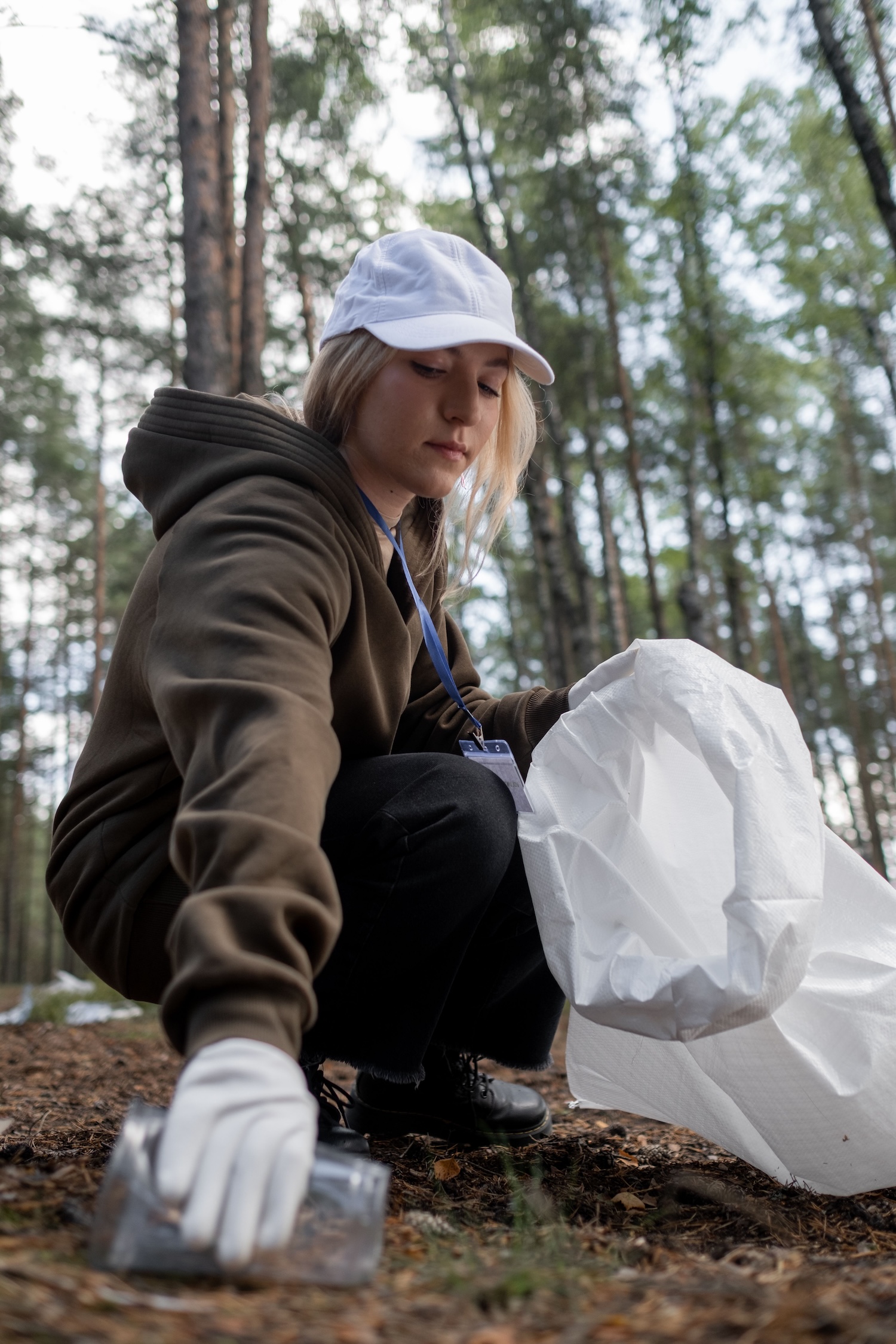
This work becomes especially important when habitat is scheduled for development. If legal authorization, landowner permission, species identification, and adequate timing are in place, ethical seed rescue may preserve a portion of a population’s genetic legacy before the site is permanently altered.
Why Policy Uncertainty Strengthens the Case for Local Action
Recent debate over federal endangered-species protections has reinforced a basic conservation reality: laws and regulatory interpretations can change, while habitat loss can be permanent.
In July 2026, WGCU and The Florida Trib reported on federal rule changes affecting how habitat damage may be considered under the Endangered Species Act. Supporters described the changes as a correction to regulatory overreach, while conservation organizations warned that weaker habitat protections could accelerate development in sensitive areas. The rules were also expected to face court challenges.
Regardless of political position, this uncertainty demonstrates why Florida benefits from durable, community-based conservation capacity. Seed collection, regional propagation, landowner relationships, scientific documentation, and volunteer training can continue across changes in administrations and regulations.
The Florida Seed Bank’s Role
Florida Seed Bank operates to help close a critical gap between habitat protection and on-the-ground restoration. Our goal is to build a lawful, ethical, scientifically documented seed conservation network serving Florida’s diverse regions and ecosystems.
Our model combines:
- Ethical collection from healthy native plant populations with landowner permission and required authorization.
- Documentation of species, source location, date, habitat, and collection history.
- Chemical-free drying, cleaning, sorting, testing, and storage.
- Regional seed-amplification plots that increase supply without repeatedly pressuring wild populations.
- Partnerships with volunteers, private landowners, nurseries, botanical gardens, researchers, agencies, and restoration organizations.
- Education that expands Florida’s long-term capacity for responsible native seed stewardship.
What Grant Investment Can Make Possible
Early funding would help transform this mission into measurable conservation capacity. Support can provide the tools, training, facilities, systems, and partnerships needed to move seed safely from the field into documented storage and eventually back into Florida landscapes.
- Field collection supplies, GPS documentation, labels, bags, tools, and safety equipment.
- Seed-cleaning screens, drying systems, moisture controls, and appropriate storage materials.
- Viability testing, species verification, database development, and scientific recordkeeping.
- Volunteer training in identification, legal collection, ethical harvesting, and processing.
- Regional amplification plots for native wildflowers, grasses, and priority restoration species.
- Partnerships with landowners whose native habitat is intact, vulnerable, or scheduled for disturbance.
- Public education and restoration support that extends the value of every collected seed.
Conserving Species and Rebuilding Ecosystems Are Different Scales of the Same Work
Preventing the loss of rare plants is essential, but restoration also requires large quantities of genetically appropriate seed from grasses, wildflowers, trees, shrubs, legumes, host plants, and other species that build functioning plant communities. Florida Seed Bank conserves both ends of that spectrum.
Florida has roughly 3,200 native plant species. Our goal is to preserve documented regional genetics before species become rare, while also developing restoration-scale seed supplies so conservation collections can translate into acres of functioning habitat rather than remaining only in storage.
Florida’s Native Flora Is a Genetic Landscape
Florida's roughly 3,200 native plant species are not merely a list of species. They represent thousands of locally adapted populations shaped by geography, soils, hydrology, climate, fire, pollinators, and other ecological pressures.
Florida Seed Bank connects native plant genetic conservation with restoration at statewide scale. Our work preserves documented regional populations before they become rare and expands locally appropriate seed so conserved genetics can ultimately return to functioning landscapes.
Conserving those populations before they disappear is part of the foundation of Florida's future restoration capacity.
Restoration Needs Local Genetics, Not Just Native Labels
A plant can be native to Florida and still come from a population adapted to very different environmental conditions from the restoration site where it is being planted. That is why Florida Seed Bank places regional and hyperlocal provenance at the center of its conservation work.
Restoration-scale seed production begins with documented source material. When provenance is preserved through collection, amplification, and use, restoration practitioners have a better chance of working with plant material appropriate to the ecological setting they are trying to rebuild.
Florida Seed Bank’s long-term objective is to expand the supply of documented, geographically appropriate native seed without repeatedly drawing from wild populations.
Preserve the Genetics Before the Population Disappears
Once a local population is gone, its exact genetic history may be impossible to recreate. Conservation before crisis protects choices for the future: restoration, research, propagation, adaptation studies, species recovery, and ecological rebuilding.
Preserving the Ability to Restore
Florida does not have an unlimited amount of time to build this capacity. Development continues. Wild populations are becoming smaller and more isolated. Climate pressures are increasing. Some plant populations may disappear before they are fully documented, studied, or represented in conservation collections.
Native seeds are small, but what they contain is enormous: genetic history, ecological relationships, future habitat, and the possibility of recovery.
Protecting seeds today gives future Floridians a choice. Without them, future restoration teams may inherit damaged land but lack the living material needed to heal it.
Florida’s native seed supply is not simply a collection of future plants. It is the state’s capacity to restore what development, disaster, and environmental change may take away.
Sources and Further Reading
- Florida Department of Agriculture and Consumer Services: Florida’s Endangered Plants
- Florida Fish and Wildlife Conservation Commission: Wildlife 2060 — Habitat Loss
- Florida Museum of Natural History: Endangered Species in Florida
- Florida Climate Institute: Climate Change Impacts on Florida’s Biodiversity and Ecology
- WGCU and The Florida Trib: Florida Wildlife and Endangered Species Act Rule Changes
- Community discussion of the WGCU report