Florida’s Future Depends on Keeping Wild Florida Connected
A conservation map can show millions of acres in green. But a map alone cannot keep a panther alive, protect a native plant population, or stop a floodplain from becoming a subdivision.
The question is whether those lands remain connected, protected, and ecologically functional.
Florida Seed Bank supports protecting the Florida Wildlife Corridor and the native plant communities that make it a living landscape. Conservation should not mean preserving scattered islands of habitat while allowing the connections between them to disappear.
Bill Kearney’s May 2, 2024, reporting, published by Inside Climate News and WLRN, examines research on how land conservation can help Florida face climate change and development pressure. The central finding is important: connected natural landscapes can benefit people as well as wildlife.
A Corridor Is More Than a Line on a Map
The Florida Wildlife Corridor links natural areas, working lands, and waters across the state. It is not one continuous park, and inclusion within its mapped boundaries does not mean every property is permanently protected.
According to Florida Atlantic University’s April 2024 research summary, the corridor encompassed approximately 18 million acres, with about 10 million permanently conserved and another 8 million identified as conservation opportunities. These are figures from the 2024 study, not an updated inventory for 2026.
That distinction matters. Land identified as an opportunity for conservation can still be lost before protection is secured. Florida Seed Bank’s position is that keeping those connections intact must be a priority in development decisions—not an afterthought once land has been cleared.
Wildlife Protection Is Also Climate Protection
Archbold Biological Station reports that approximately two-thirds of Florida’s floodplains—about 10 million acres—fall within the corridor. Its research identifies substantial flood-protection benefits from keeping those areas undeveloped.
Floodplains should not be treated as wasted space. Giving water room is part of protecting the communities around it. Florida Seed Bank believes land-use decisions must account for that public benefit before trading a functioning landscape for another development footprint.
The research also makes an important qualification: conserving land is necessary, but it is not enough on its own. Archbold emphasizes continued management, including prescribed fire, to maintain habitats and reduce wildfire risk. Protection must include the resources and expertise needed to care for the land.
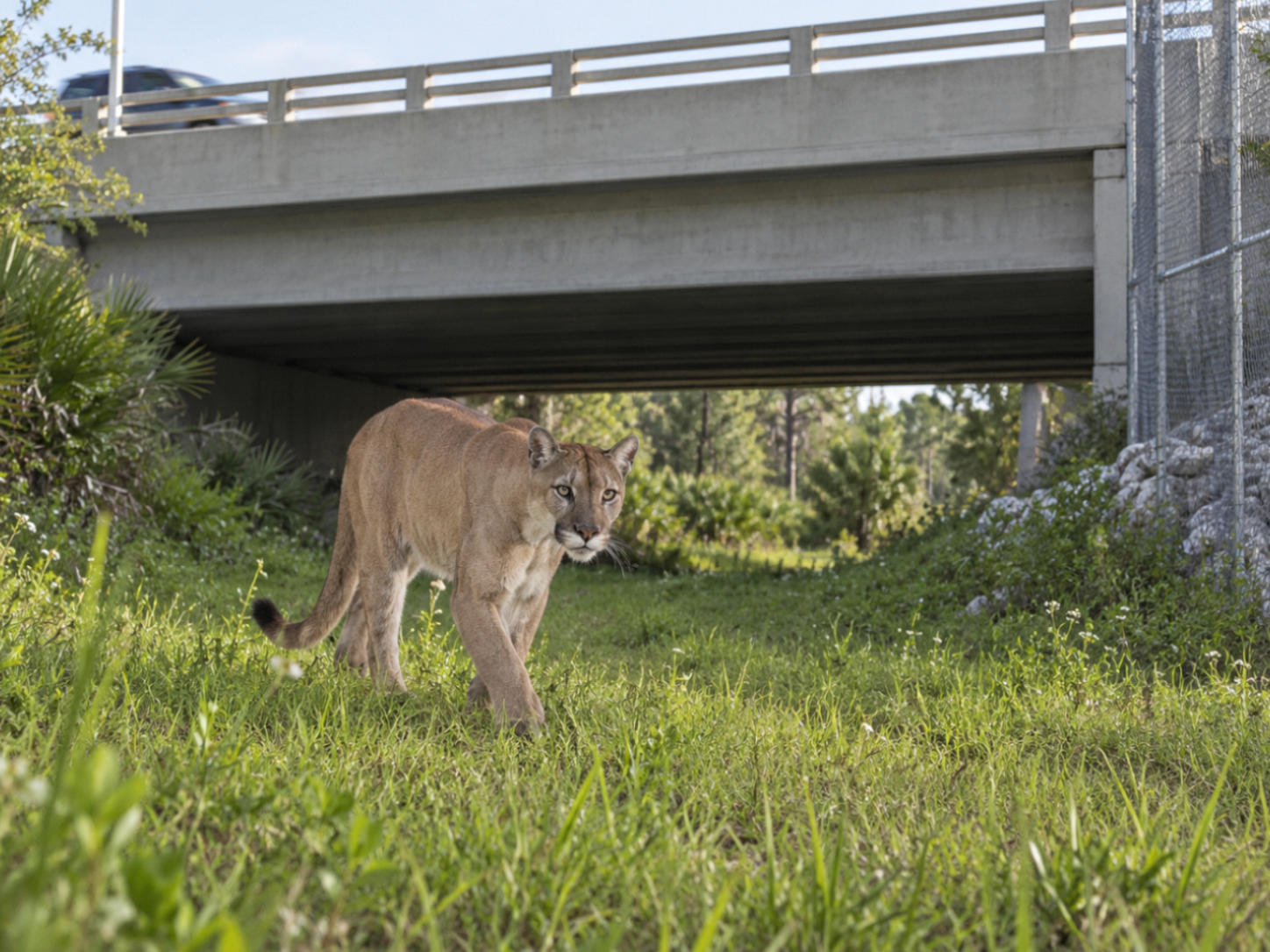
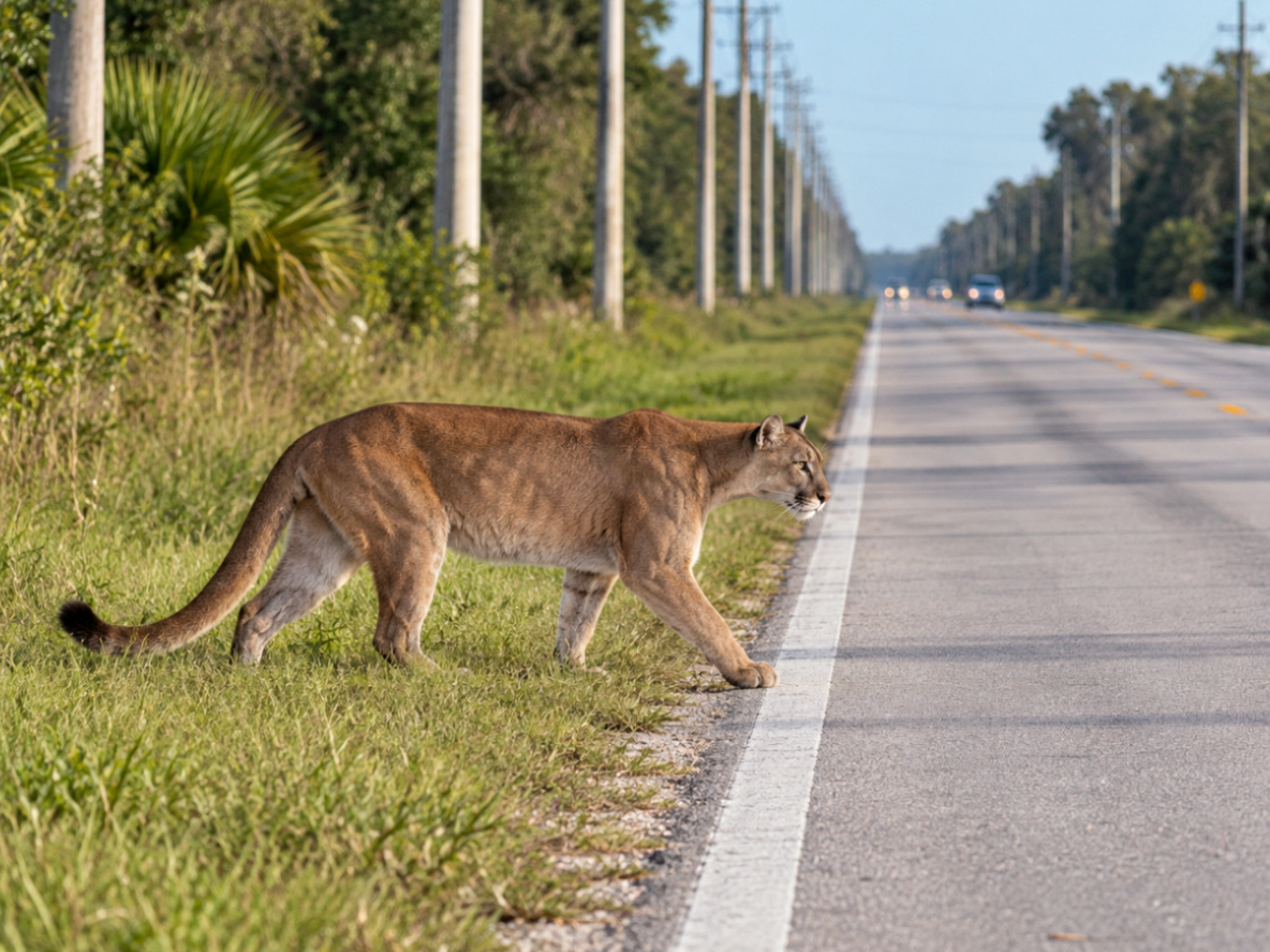
The Florida Panther Needs Safe Passage
In its May 17, 2024, report, ABC News examines how corridors and wildlife crossings could help Florida panthers recover.
A wildlife corridor and a wildlife crossing are related, but they are not interchangeable. A corridor provides landscape connectivity. A crossing helps animals negotiate a specific road barrier.
The Federal Highway Administration identifies reducing wildlife-vehicle collisions and improving habitat connectivity as the purposes of its Wildlife Crossings Program. Safe passage is both a conservation issue and a transportation-safety issue.
Florida Seed Bank supports crossings where wildlife movement and collision evidence demonstrate a need. But a crossing must connect to habitat worth reaching. Building an underpass while allowing development to consume the land around its approaches defeats the purpose of reconnecting a landscape.
Road planning and habitat protection need to be considered together. Neither should be used to excuse avoidable damage from the other.
A Wildlife Corridor Is Also a Plant Corridor
Panthers are powerful symbols of conservation. Our perspective at Florida Seed Bank begins with another part of the same landscape: its native plants.
Protecting wildlife habitat should include protecting the vegetation, soils, water conditions, and ecological processes that make that habitat function. A development proposal should not be evaluated only by asking whether a large animal was seen on the property.
Native plant populations deserve attention in their own right. Our conservation priorities include botanical surveys, protection of rare plant sites, control of invasive plants, and restoration suited to the actual ecosystem—not replacement with ornamental landscaping.
Connectivity is not a guarantee that every plant species can adapt to climate change. Species have different dispersal abilities and habitat requirements. That is a reason for careful, species-specific conservation, not a reason to abandon landscape protection.
Sprawl Is a Choice, Not an Inevitability
The 2024 reporting compared development scenarios through 2070: approximately 3.5 million acres of rural land lost under a sprawl scenario, versus about 2 million under a more compact conservation scenario. These were modeled alternatives, not a prediction that every projected acre would necessarily be developed.
For Florida Seed Bank, the implication is clear: how Florida accommodates growth matters. Housing and infrastructure decisions should prioritize avoiding high-quality native habitat and preserving essential connections.
Calling a project “green” should not substitute for showing what land it will consume, which habitats it will divide, and whether its roads and utilities will create additional barriers.
Seed Banking Is Support, Not a Substitute
Seed conservation belongs alongside habitat protection. Documented collections can help preserve plant genetic material and support appropriate future propagation and restoration.
But stored seeds cannot replace a living corridor.
Seed collection must never become permission to bulldoze the habitat that produced the seeds. Nor should conservation claims assume that every species can be stored successfully or restored simply by scattering seed afterward.
Our position is to protect living populations first, use responsible seed conservation as complementary protection, and plan restoration around ecological evidence and appropriate permissions.
What Florida Seed Bank Supports
- Securing vulnerable corridor connections through conservation purchases, easements, and appropriate land-use protections.
- Protecting wetlands, floodplains, and high-quality native plant communities before development decisions are finalized.
- Pairing evidence-based wildlife crossings with lasting protection of the habitat on both sides.
- Funding habitat management, invasive-plant control, and ecologically appropriate prescribed fire.
- Including botanical expertise and rare-plant surveys in environmental review.
- Using seed conservation to complement—not replace—protection of living ecosystems.
- Evaluating cumulative impacts from roads, utilities, and neighboring developments, rather than reviewing each footprint in isolation.
Keep the Corridor Alive
The Florida Wildlife Corridor should be more than a conservation promise. It should remain a functioning landscape with room for wildlife, native plants, water, and the ecological relationships that sustain them.
Florida Seed Bank’s message is straightforward: protect the connections before they are lost. Keep native ecosystems intact. Give wildlife safe passage. And do not mistake a seed collection, a mitigation payment, or a green label for the living Florida we are trying to conserve.
Sources and Further Reading
This is original Florida Seed Bank commentary informed by the following reporting and research. Historical figures and development scenarios above are identified by their 2024 source dates.
- Inside Climate News: Florida in 50 Years—Study Says Land Conservation Can Buffer Destructive Force of Climate Change — May 2, 2024. Read the accessible WLRN republication.
- ABC News: How experts are trying to save the Florida panther — May 17, 2024.
- Florida Atlantic University’s April 2024 research summary.
- Archbold Biological Station: Climate and wildlife corridors, with links to the report and executive summary.
- Federal Highway Administration: Wildlife Crossings Program.