Florida conservation is much bigger than the Everglades, tropical hardwood hammocks, mangroves, and South Florida orchids. Travel hundreds of miles north into the Florida Panhandle and the landscape changes dramatically. Towering longleaf pines rise above wiregrass, wildflowers, wet prairies, and some of the most remarkable carnivorous plant communities in the United States.
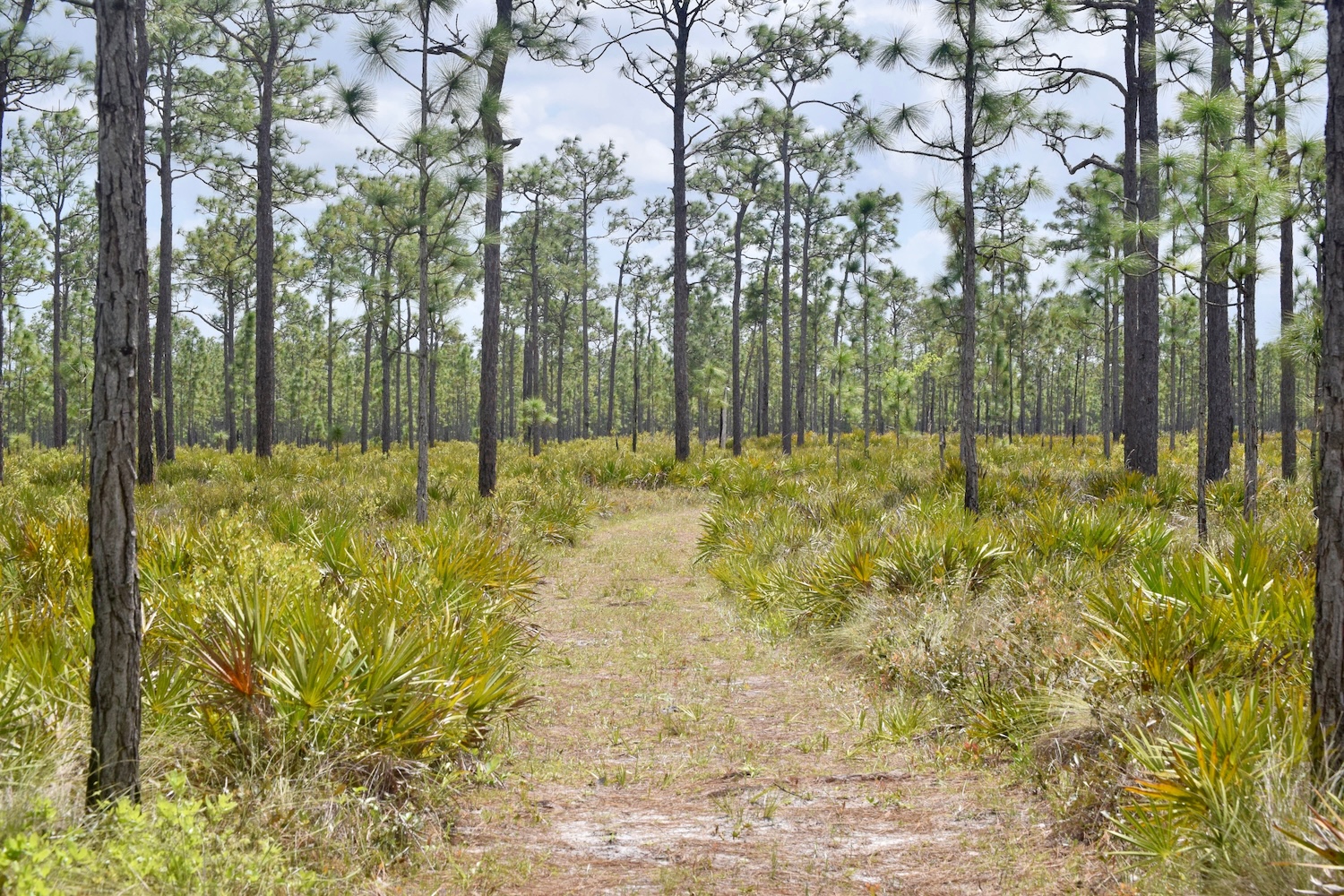
These ecosystems help demonstrate why the Florida Seed Bank is being built as a statewide conservation effort. A seed collection from Miami-Dade County cannot represent the genetics of a plant population growing near Pensacola, Tallahassee, or the Apalachicola River. Florida stretches across hundreds of miles, multiple climate zones, different soils, different watersheds, and dramatically different natural communities.
Protecting Florida’s botanical diversity therefore means preserving plants from every region of the state, including Northwest Florida’s longleaf pine savannas and wet prairies.
A Different Side of Florida
- Longleaf pine ecosystems extend across much of northern and central Florida.
- Northwest Florida contains extensive fire-dependent pine savannas, flatwoods, sandhills, seepage slopes, and wet prairies.
- The Florida Panhandle supports spectacular pitcher plant communities and diverse native wildflowers.
- Frequent fire is essential for maintaining the open conditions many native plants require.
- Seed collected locally can preserve genetic adaptations unique to particular soils, watersheds, climates, and fire regimes.
The Longleaf Pine Forest Is More Than Pine Trees
The longleaf pine, Pinus palustris, once dominated enormous portions of the southeastern Coastal Plain. Today only a fraction of the historic longleaf ecosystem remains after generations of logging, conversion to agriculture and plantations, development, and fire suppression.
But the biological importance of a longleaf pine forest is not found only in the trees.
A healthy longleaf savanna has an open canopy that allows sunlight to reach the ground. Beneath the pines can grow wiregrass, bluestems, asters, blazing stars, orchids, legumes, milkweeds, insect-eating plants, and many other native species.
In these ecosystems, the ground layer can hold an extraordinary amount of biodiversity. Restoring only the pine trees without restoring the native grasses and wildflowers underneath them does not recreate the entire ecosystem.
Restoring a forest is not simply about putting the trees back. The seeds beneath those trees can represent generations of local adaptation that are equally important to the landscape.
A Landscape Born to Burn
Fire is not an ecological disaster in a healthy longleaf pine savanna. It is one of the processes that created and maintained the ecosystem.
Historically, frequent fires moved across these landscapes at relatively short intervals. Lightning provided natural ignitions, while Indigenous people also used fire as a land-management tool for thousands of years.
Longleaf pines are remarkably adapted to this environment. Young trees spend part of their early life in what is called the grass stage. Their growing point remains close to the ground and is protected by a dense cluster of long needles. Later, the tree grows rapidly upward and eventually develops thick bark that provides additional protection from fire.
Wiregrass and other native groundcover plants also help carry low surface fires across the landscape.
Those fires reduce invading hardwoods and dense woody vegetation, keep sunlight reaching the forest floor, recycle nutrients, and create conditions in which many native grasses and wildflowers can continue to thrive.
What Happens When Fire Disappears
When fire is excluded for too long, the structure of the ecosystem begins to change.
Oaks, shrubs, and other woody plants can become increasingly dense. The forest canopy and midstory begin blocking sunlight from the ground. Native grasses and flowering plants that evolved under open, sunny conditions decline.
Eventually, a biologically rich pine savanna can transition toward a much denser forest that supports a very different community of plants.
Prescribed fire is therefore one of the most important tools available to land managers working to protect and restore longleaf pine ecosystems.
What Longleaf Savanna Seed Conservation Can Protect
- Locally adapted wiregrass and native bunch grasses.
- Wildflowers that support native bees and other pollinators.
- Seed from restoration-quality longleaf pine populations.
- Rare plants associated with fire-maintained habitats.
- Genetic differences between Panhandle, North Florida, and Central Florida populations.
- Seed needed for restoration after development, storms, wildfire, invasive species, or other habitat loss.
- Reference collections that document where native plant genetics originally occurred.
The Panhandle’s Remarkable Pitcher Plant Prairies
Some of Northwest Florida’s most extraordinary plant communities occur where pine landscapes meet wet prairie, seepage slopes, and seasonally saturated soils.
These open wetlands can support dense communities of carnivorous pitcher plants. Near the Apalachicola River, yellow pitcherplant, Sarracenia flava, can be prominent. Farther west in the Panhandle, white-top pitcherplant, Sarracenia leucophylla, can form striking colonies.
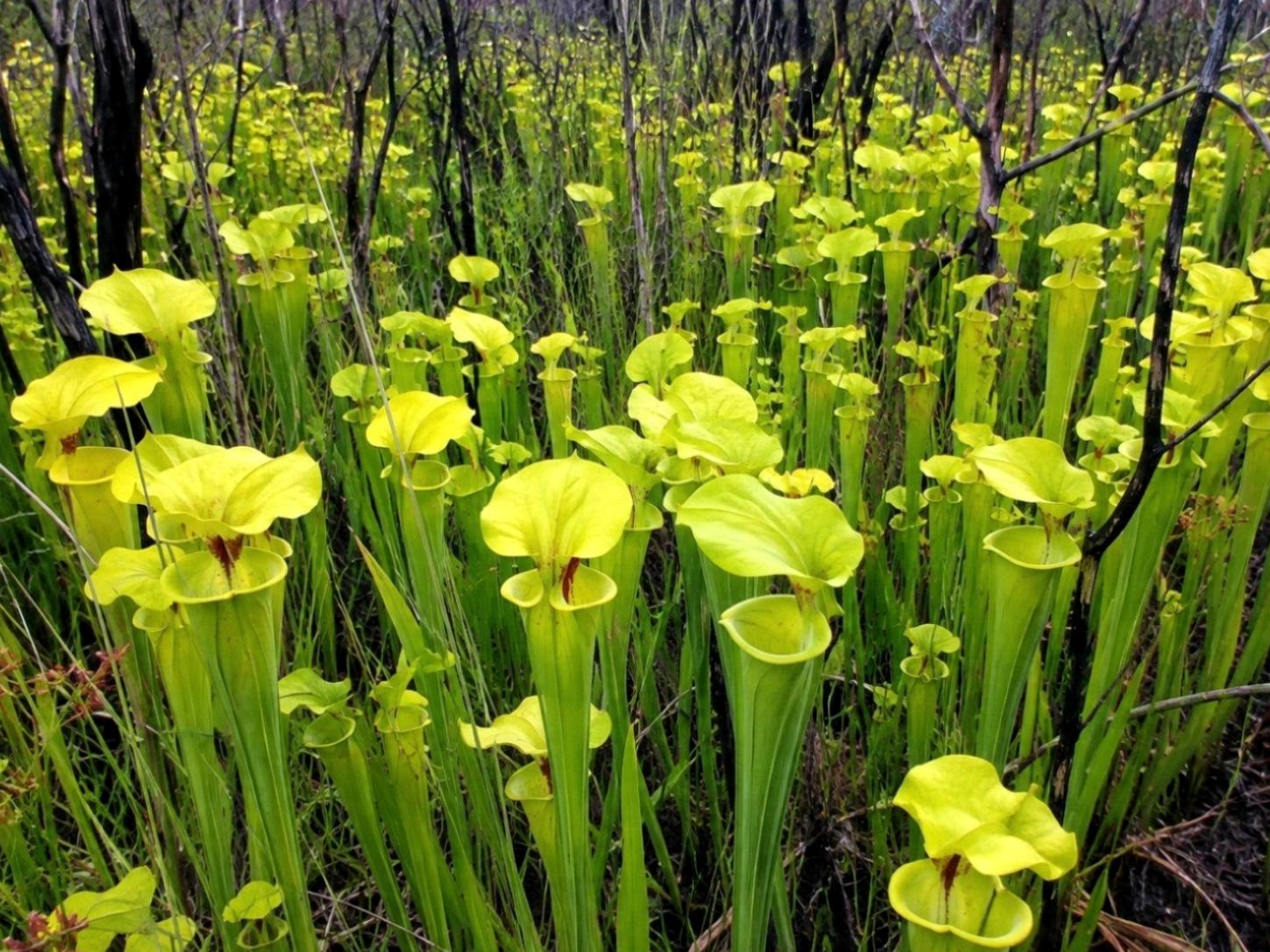
Other native pitcher plants can occur alongside them, including sweet pitcherplant, parrot pitcherplant, and Gulf purple pitcherplant.
These plants survive in nutrient-poor soils by capturing insects, an adaptation that allows them to occupy habitats where many ordinary plants would struggle.
But pitcher plant habitat depends on more than wet soil. Hydrology, open sunlight, periodic fire, surrounding vegetation, and the absence of damaging disturbance all influence whether these communities survive.
Why Regional Seed Matters
Florida needs vastly more geographically representative native seed available for ecosystem restoration. Florida Seed Bank preserves regional provenance and expands locally appropriate seed supplies so restoration does not treat genetically and ecologically distinct Florida populations as interchangeable.
A species may grow across much of Florida while still containing important genetic differences from one region to another.
Plants growing for generations in the western Panhandle may experience different winter temperatures, rainfall patterns, soils, fire histories, pollinators, and growing seasons than populations of the same species hundreds of miles away.
Those differences matter when seed is used for ecological restoration.
Whenever possible, restoring a Panhandle ecosystem should involve seed appropriate to that region rather than assuming that any seed of the same species from anywhere in Florida is interchangeable.
This is one reason a statewide seed bank needs detailed collection records. A useful accession should document not only the species name but where the seed originated, when it was collected, what habitat surrounded it, and which population produced it.
Florida Still Has Millions of Acres of Longleaf Ecosystem
Although the historic longleaf pine ecosystem has been dramatically reduced across the Southeast, important areas remain.
The Florida Natural Areas Inventory has confirmed approximately 2.4 million acres of longleaf pine ecosystem within Florida. A substantial portion occurs on private property, meaning the future of the ecosystem depends not only on public parks, forests, and preserves but also on private landowners.
Places such as the Apalachicola National Forest, Blackwater River State Forest, Eglin Air Force Base, and other conservation lands protect major areas of Northwest Florida habitat. At the same time, smaller private properties can contain important remnants of native groundcover and genetically valuable plant populations.
Conservation at the statewide level therefore requires cooperation among public agencies, scientists, landowners, restoration professionals, volunteers, native plant organizations, and seed conservation programs.
Seed collection should always respect land ownership, protected species laws, permit requirements, and the health of the source population. Rare plants and small populations should never be collected simply because seed is available. Ethical conservation collection requires planning, documentation, and appropriate authorization.
A Florida Seed Bank Must Represent All of Florida
South Florida may be famous for tropical orchids, bromeliads, mangroves, and the Everglades, but those ecosystems represent only part of Florida’s botanical story.
The Panhandle has its own extraordinary biological identity. Longleaf pine savannas, pitcher plant prairies, seepage slopes, sandhills, flatwoods, rivers, and coastal habitats support plants adapted to conditions that can be dramatically different from those at the southern tip of the peninsula.
Central Florida scrub has another story. Northeast Florida wetlands have another. The Atlantic coast, Gulf Coast, Lake Wales Ridge, Big Bend, Keys, and interior prairies each contain plant populations shaped by their own environments.
A true Florida seed conservation program must represent that diversity.
That means building collections across regions rather than concentrating seed from only the most accessible places. It means recording provenance, protecting genetic diversity, partnering with landowners, developing appropriate storage methods, amplifying regionally appropriate seed, and preserving enough material to support meaningful restoration.
Florida is not one ecosystem. It is a mosaic of landscapes stretching from the western Panhandle to the Florida Keys.
Florida Seed Bank’s statewide goal is to preserve that botanical inheritance across Florida’s roughly 3,200 native plant species, one documented population at a time, while expanding the geographically appropriate seed supply needed to restore the ecosystems those species create.