Florida is home to a native vanilla orchid so rare that the loss of a single mature vine can represent a meaningful blow to an entire local population.
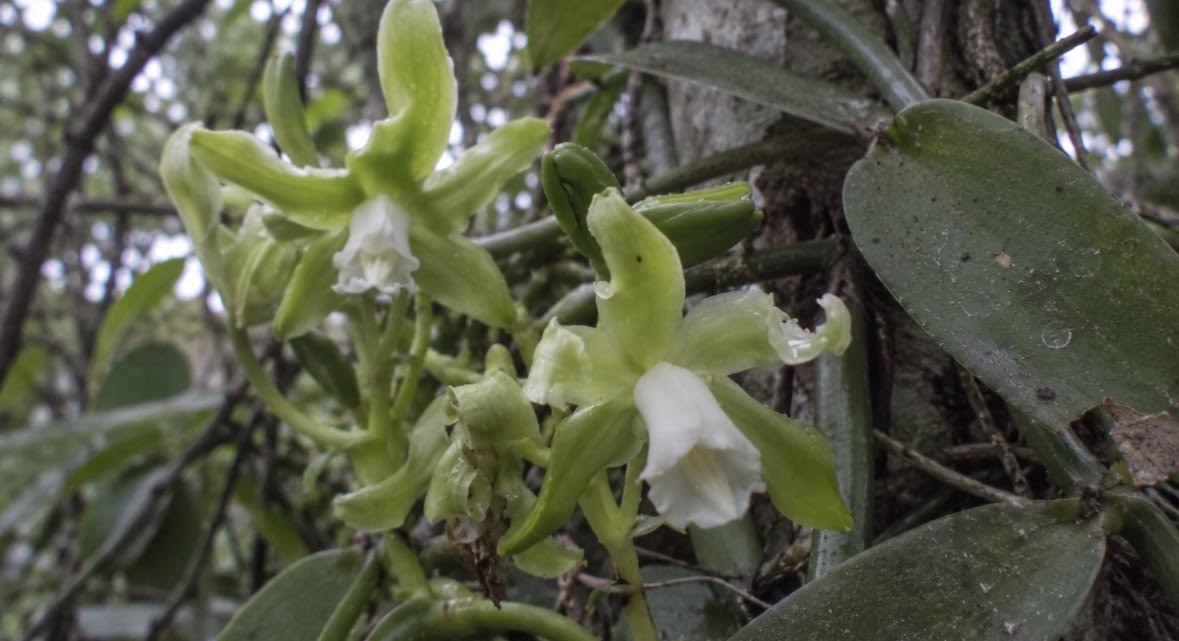
Vanilla mexicana, commonly called scentless vanilla or Mexican vanilla, is a climbing orchid native to tropical America and the Caribbean, with Florida forming the extreme northern edge of its natural range. In Florida, it is listed as Endangered and is considered critically imperiled within the state.
Unlike the commercial vanilla orchid used to flavor foods, Vanilla mexicana is not important because of culinary vanilla production. Its significance is ecological and genetic. It represents a unique part of Florida’s native orchid flora and, in this state, survives at the far northern edge of a much larger tropical distribution.
That Florida population has already come frighteningly close to disappearing.
Why Vanilla mexicana Matters
- It is a native Florida orchid listed as endangered in the state.
- Florida represents the northern edge of the species’ natural range.
- Its known Florida populations are extremely limited and geographically vulnerable.
- Hurricanes can destroy individual vines, host trees, canopy cover, and the humid microhabitat the orchid needs.
- The plant produces seed capsules and is capable of spontaneous self-pollination.
- Seed conservation could preserve material for future research, propagation, and restoration.
A Species That Has Already Survived One Near-Extinction
The history of Vanilla mexicana in Florida illustrates exactly why conserving small, geographically isolated plant populations matters.
Research on North American native vanilla orchids has reported that V. mexicana was once believed to have been extirpated from North America following Hurricane Andrew in 1992.
The species was eventually rediscovered.
Historical records place it in both Miami-Dade and Martin counties, but the distinction between an old botanical record and a healthy, reproducing population is extremely important. Rare plant records can remain in databases long after populations have declined, disappeared, or become uncertain.
Today, Martin County is especially important to the survival of the species in Florida, with known populations there representing some of the most significant remaining documented habitat.
For a plant already reduced to so few known locations, every surviving population matters.
When One Tree Can Matter
University of Florida vanilla researcher Alan H. Chambers documented just how vulnerable these orchids can be after visiting a Florida population before and after a major hurricane.
Before the storm, Chambers encountered an exceptionally large V. mexicana vine carrying numerous flowers.
When he returned after the hurricane, the swamp had been dramatically altered.
Trees that once created the shaded canopy required by the orchid had fallen, allowing much more sunlight into the habitat.
The large vanilla vine had suffered an even more direct blow: a palm had fallen onto the location where it grew.
Chambers noted that the loss represented a percentage of the entire known population.
A hurricane does not need to destroy an entire preserve to threaten a species. It may only need to topple the wrong tree.
For a common plant numbering in the millions, the destruction of one individual might have little population-level significance.
For an endangered orchid surviving as scattered vines in only a handful of places, it can be very different.
Hurricanes Change More Than the Plants They Hit
The vulnerability of Vanilla mexicana also demonstrates why hurricane damage cannot be measured simply by counting plants immediately killed by wind.
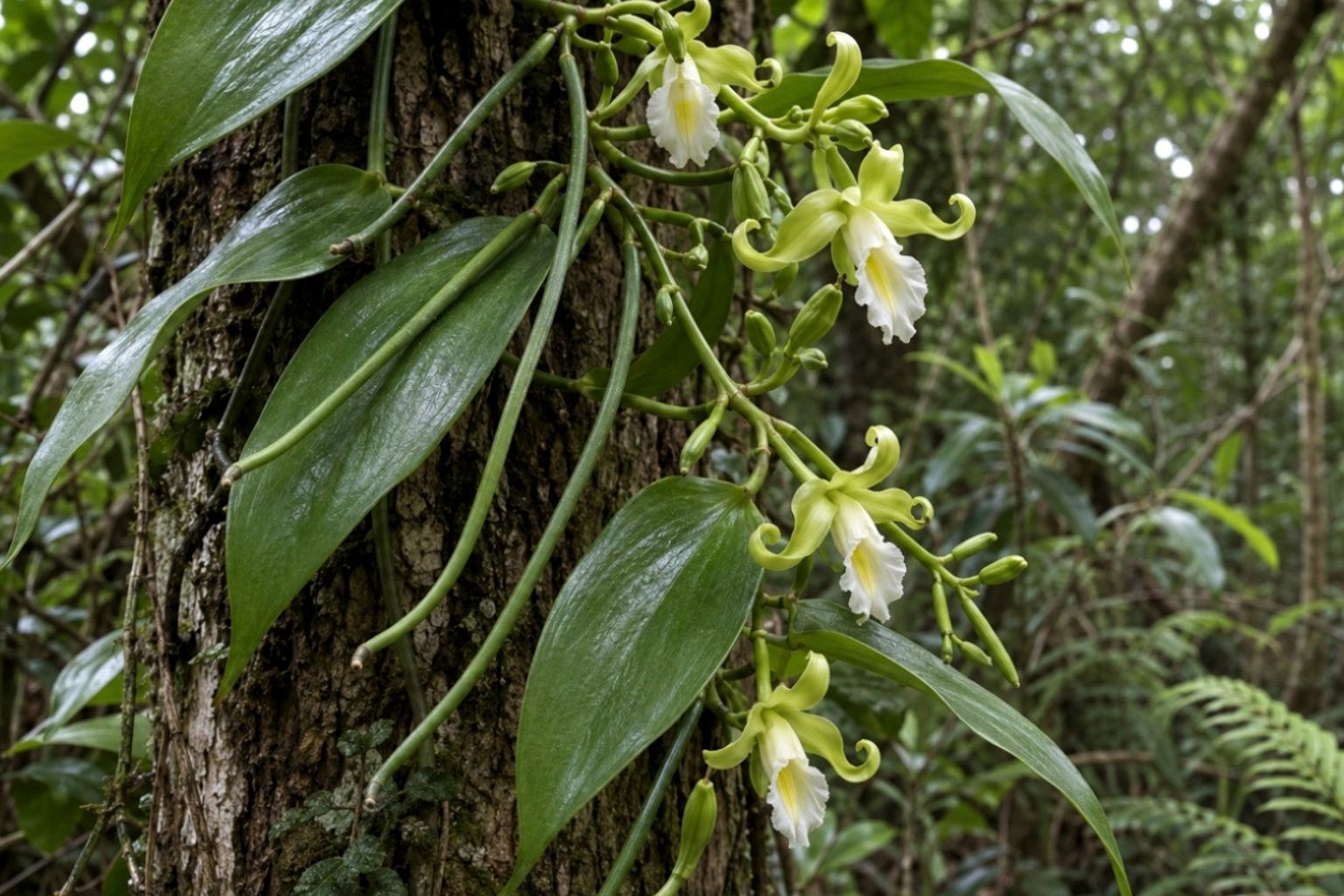
This orchid grows as a climbing vine in wet forests, swamps, and hammocks. Its aerial roots attach to trees as it climbs through its habitat.
Those trees provide much more than something to climb.
They create the humid, shaded microclimate in which the orchid survives.
When hurricanes break branches, topple mature trees, and open the canopy, surviving vanilla vines can suddenly find themselves exposed to dramatically different conditions.
Greater sunlight, drying, altered humidity, and changes in surrounding vegetation can continue affecting a population long after the storm has passed.
That means hurricane damage can continue for years.
A vine that survives the initial storm may later decline because the habitat that protected it no longer exists in the same form.
Martin County Has Become Particularly Important
Martin County contains some of the most significant documented habitat for Florida’s remaining Vanilla mexicana.
Historical records have placed the orchid in protected natural areas in the county, and local land-management documents have described cooperation with researchers and botanical institutions regarding populations of the species.
Accounts of Florida populations have also deliberately withheld exact locations because of the risk of illegal orchid collection.
That secrecy is appropriate.
Rare orchid locations should generally not be publicly disclosed.
Poaching and unauthorized collection can be devastating when a species exists as only a handful of wild vines.
It is also important not to overstate the current distribution. Historical records exist outside Martin County, particularly in Miami-Dade County, and the continued status of every previously documented population is not always clear.
But what is clear is that Martin County now represents an extraordinarily important refuge for the species.
When populations become this geographically concentrated, the risks increase dramatically.
A hurricane, wildfire, disease outbreak, hydrological change, or illegal collection event can affect a much larger percentage of the surviving genetic population than it would for a widespread species.
A Rare Orchid That Gives Conservationists an Opportunity
There is another aspect of Vanilla mexicana that makes its conservation especially compelling.
It produces seed pods and is capable of spontaneous self-pollination.
In other words, the plant does not always require a separate individual or even an animal pollinator in order to set fruit.
Researchers studying V. mexicana have documented autogamy — self-pollination without pollinator intervention — and wild Florida plants have been observed developing seed capsules without manual pollination.
Those seed pods may be one of the most valuable tools available for preserving the species.
Each mature vanilla capsule can contain enormous numbers of extremely small orchid seeds.
For conservationists, that creates an opportunity.
If mature pods can be legally and responsibly collected from Florida’s remaining populations, they could provide material for long-term conservation, germination research, and potentially future restoration.
But there is an important distinction.
Thousands of seeds do not necessarily mean thousands of genetically different plants.
If a flower self-pollinates, many of the resulting seeds represent offspring from the same individual.
A single pod may therefore contain a tremendous number of seeds while representing only a narrow portion of the genetic diversity remaining in the wild population.
That is why a scientifically meaningful seed collection cannot simply be measured by seed count.
One Pod Is Not a Population
This point is central to the philosophy behind conservation seed banking.
Suppose one surviving Vanilla mexicana vine produces a capsule containing thousands of viable seeds.
At first glance, it might appear that the species has been safely backed up.
But those seeds largely represent the genetics of one parent plant.
If ten surviving vines contain different genetic combinations that allow some to tolerate heat, flooding, disease, drought, salt exposure, or other environmental stresses, conserving only one of those vines would leave much of that diversity behind.
For endangered species, genetic diversity is itself something that must be conserved.
A robust collection strategy should therefore seek, where legally permitted and scientifically appropriate, seed from multiple vines, multiple locations, and multiple fruiting events.
Each collection should be documented separately.
The goal is not merely to accumulate the greatest number of seeds.
The goal is to preserve the broadest possible representation of the wild population.
For Florida Seed Bank, that distinction is fundamental.
A container holding 100,000 seeds from one plant is not necessarily more valuable than a collection containing far fewer seeds gathered responsibly from ten genetically distinct plants.
Conservation is about representation, not volume.
Why Self-Pollination Is Both an Advantage and a Warning
The ability of Vanilla mexicana to self-pollinate offers an obvious survival advantage when individuals are scattered far apart.
A single isolated vine may still produce fruit even when another flowering plant is nowhere nearby.
That may help explain how tiny populations can persist.
But repeated self-fertilization can also reduce genetic diversity over time.
In very small populations, that is a concern because genetic variation gives species more options for adapting to environmental change.
Florida’s populations occur at the northern edge of the species’ range and already face a distinctive combination of environmental pressures.
Hurricanes are only one of them.
Hydrological changes, invasive plants, rising temperatures, saltwater intrusion, development pressure, and habitat fragmentation can all influence whether populations survive.
Preserving as much remaining genetic variation as possible therefore becomes especially important.
Florida Seed Bank treats endangered and highly sensitive plants differently from routine restoration species. Any wild collection involving protected orchids must be legally authorized, scientifically justified, carefully documented, and supported by the permits, land-management approvals, propagation knowledge, and professional expertise appropriate to the population.
This Is Why Seed Banking Matters
The story of Vanilla mexicana captures one of the fundamental reasons Florida needs long-term conservation collections.
Wild populations must always remain the first priority.
A seed bank is not a replacement for protecting habitat.
But habitat protection alone cannot stop hurricanes.
A preserve can be permanently protected from development and still experience catastrophic canopy loss in a matter of hours.
A hurricane can topple the exact trees supporting a rare orchid population.
Flooding, saltwater intrusion, wildfire, disease, invasive plants, and changing climate conditions can compound those losses.
And when nearly an entire regional population occupies only a handful of sites, those events become much more dangerous.
Seed banking creates another layer of protection.
It gives conservationists the opportunity to preserve biological material before a catastrophic loss occurs.
Orchid Seeds Require More Than a Freezer
Preserving Vanilla mexicana is not as simple as collecting pods and placing them into storage.
Orchid seeds are extraordinarily small and contain very little stored nutrition.
In nature, germination generally depends on relationships with compatible mycorrhizal fungi that provide developing seedlings with nutrients.
That means effective orchid conservation can involve much more than seed storage alone.
What Effective Orchid Conservation May Include
- Carefully documented seed collections from multiple maternal plants.
- Viability and germination testing.
- Preservation or study of associated mycorrhizal fungi.
- Tissue culture and propagation research.
- Genetic analysis.
- Detailed geographic and habitat records.
- Duplicate collections stored in more than one physical location.
The seed is the beginning of the conservation process, not the end.
A freezer containing seeds that nobody knows how to germinate provides only partial protection.
The strongest conservation program preserves both the biological material and the knowledge needed to turn that material back into living plants.
The Importance of Geographic Backup
Florida’s hurricane risk creates another lesson from the story of Vanilla mexicana.
Conservation collections themselves should not all be stored in one location.
If the wild population is vulnerable because it exists in only a handful of sites, recreating that same vulnerability inside a seed bank would make little sense.
A major hurricane, fire, flood, equipment failure, or prolonged power outage could threaten an entire collection if every sample were stored in the same facility.
Florida Seed Bank’s long-term vision includes geographically separated backup collections for exactly this reason.
A conservation accession collected in South Florida could eventually have duplicate material preserved elsewhere in Florida and, when appropriate, outside the state.
No single hurricane should be capable of eliminating both the wild population and its conservation backup.
A Model for Rapid-Response Conservation
Vanilla mexicana also illustrates why conservation organizations need the ability to act before disasters and habitat losses occur.
When a rare population is identified in an area threatened by development, storm damage, or environmental change, there may be a limited window in which genetic material can be responsibly preserved.
That does not mean removing plants from protected lands or collecting without authorization.
Rare plant conservation must involve landowner permission, appropriate state and federal permits where required, and coordination with agencies, researchers, and land managers.
But when collection is legal and scientifically justified, conservation groups should have protocols ready.
The worst time to design a rescue program is after the population has disappeared.
Florida Seed Bank envisions eventually supporting rapid-response seed conservation in situations where native plants face imminent loss.
The goal would not be to replace regulatory agencies, botanical gardens, or universities.
It would be to complement them — helping ensure that viable genetic material is not unnecessarily lost when there is an opportunity to preserve it.
Preserving the Seed Means Preserving Its Story
A seed-bank accession should contain more than seeds.
What a Conservation Record Should Document
- The population from which the material originated, where disclosure is legally and ethically appropriate.
- Collection date.
- Maternal vine.
- Habitat type.
- Approximate population size.
- Flowering and fruiting condition.
- Associated vegetation.
- Storm or disturbance history.
- Germination results and seed viability.
- Storage history.
Those records transform a jar of seed into a scientific conservation resource.
Decades from now, researchers may need to know whether material came from Martin County or Miami-Dade, from a shaded swamp or a more exposed habitat, or from a population that survived a particular hurricane.
Future restoration programs may depend on information that seems minor at the time of collection.
Good seed banking therefore preserves information alongside genetics.
A Warning Written Across Florida’s Landscape
There is something especially powerful about the history of Vanilla mexicana.
Hurricane Andrew once left the species feared lost from Florida.
Researchers eventually found it again.
Later storms demonstrated how quickly a portion of a surviving population could disappear beneath a fallen tree or lose the canopy conditions upon which it depended.
The orchid remains.
But survival should not be mistaken for security.
Florida sits at the northern edge of this tropical species’ range, where populations are naturally isolated and extraordinarily vulnerable.
And now, with known remaining populations increasingly concentrated in places such as Martin County, every surviving vine becomes more significant.
At the same time, Vanilla mexicana gives conservationists something invaluable: seed pods.
Its ability to self-pollinate means that even isolated plants may still produce seed.
Those capsules can contain an extraordinary number of seeds and offer a real opportunity for ex situ conservation.
But that opportunity must be handled intelligently.
One pod is not a population. One vine is not genetic diversity. And one freezer is not disaster protection.
The goal must be to preserve representative material from the remaining wild populations, understand how to germinate it, document its origin, maintain the biological relationships necessary for propagation, and keep backup collections far enough apart that a single disaster cannot destroy them all.
That is the kind of conservation infrastructure Florida increasingly needs.
Florida Has Already Been Warned
Florida’s native plants face threats on several fronts at once.
Development removes habitat. Invasive species transform it. Climate change alters temperature and rainfall patterns. Sea-level rise threatens low-lying ecosystems. And hurricanes can transform decades of ecological stability in a single night.
For common species, those pressures may cause gradual decline.
For a plant represented by only a few known populations, a single event can be catastrophic.
Vanilla mexicana has already given Florida more than one warning.
It was once thought gone.
It was rediscovered.
Then hurricanes again damaged its already limited populations.
We should not wait for the day when botanists search the remaining swamps of South Florida and find that the last vine has disappeared.
At Florida Seed Bank, our long-term mission is to help preserve Florida’s native plant diversity before loss becomes irreversible.
That means protecting seeds.
It means protecting genetics.
It means protecting the knowledge required to grow those seeds again.
And it means recognizing that for some of Florida’s rarest plants, conservation may eventually come down to a very simple question:
Did someone preserve viable, representative material before the last wild population was lost?
With Vanilla mexicana, we still have the opportunity to answer that question with yes.
Sources and Further Reading
- Alan H. Chambers: Vanilla Species Highlight — V. mexicana
- North American Orchid Conservation Center: Vanilla mexicana
- Institute for Regional Conservation: Vanilla mexicana in South Florida
- Florida Department of Agriculture and Consumer Services: Notes on Florida’s Endangered and Threatened Plants
- UF/IFAS: Vanilla Production and Native Vanilla Research