Florida is home to an extraordinary diversity of native orchids. Some cling to trees in humid forests; others rise quietly from prairie soils and seasonally wet grasslands. Two species recognized by science in the 21st century demonstrate that botanists are still learning just how rich the state’s native flora can be.
Potts’ Giant Orchid (Eulophia pottsii) was recognized at Potts Preserve in Citrus County in 2006 and formally described in 2007. Fire Ladies’ Tresses (Spiranthes igniorchis) was first collected by botanists in Polk County in 2014 and formally described in 2017. These are two notable recent discoveries, not a claim that they are definitively the two latest orchid species ever described from Florida.
Potts’ Giant Orchid: An Unexpected Find in Citrus County
In October 2006, land management specialist Joel DeAngelis encountered an unusual terrestrial orchid at Potts Preserve, a conservation property managed by the Southwest Florida Water Management District. It looked related to the crestless plume orchid (Pteroglossaspis ecristata), but the combination of its compact growth and distinct flowers prompted further examination.
Botanist Paul M. Brown worked with DeAngelis to evaluate the plant. Their description was published in 2007 under the name Pteroglossaspis pottsii, honoring Potts Preserve.
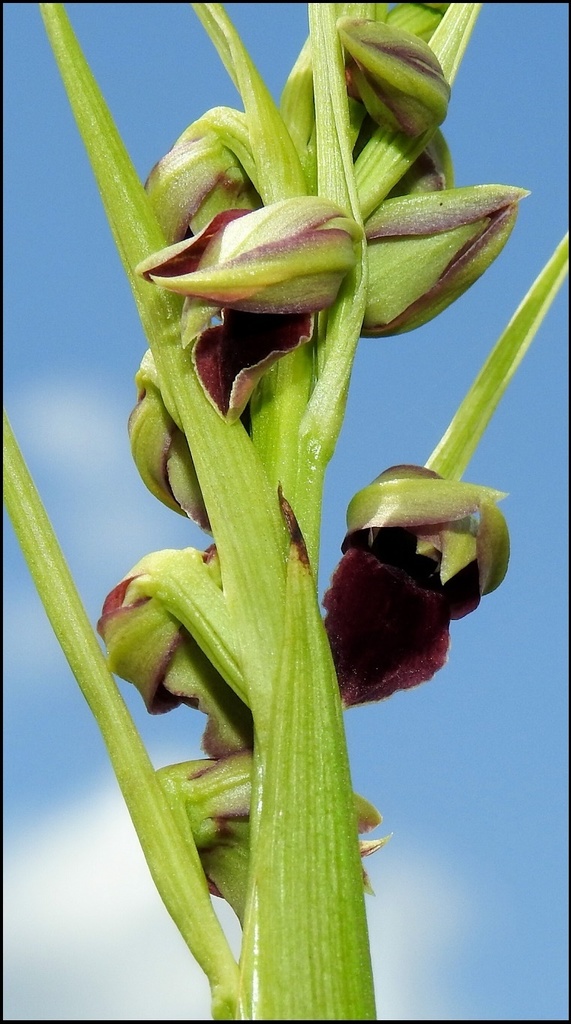
Botanical names can change as research progresses. The Royal Botanic Gardens, Kew, currently accepts Eulophia pottsii; the original name Pteroglossaspis pottsii and the combination Orthochilus pottsii are listed as synonyms. iNaturalist uses Orthochilus pottsii for observations of this same orchid, which is why its photo records appear under that name.
Meet Potts’ Giant Orchid
- First reported: 2006, Potts Preserve, Citrus County.
- Formal description: 2007, by Paul M. Brown and Joel DeAngelis.
- Accepted scientific name at Kew: Eulophia pottsii.
- Growth form: Terrestrial, growing in soil rather than on trees.
- Conservation lesson: Even landscapes with a history of grazing and disturbance may retain remarkable native plant populations.
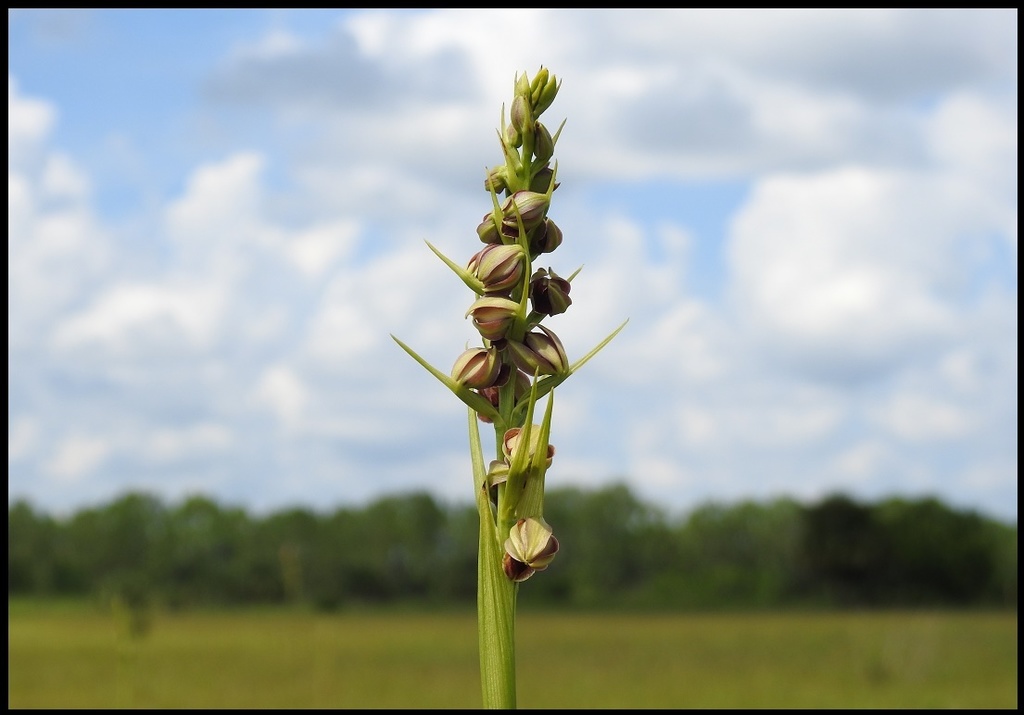
How a Former Cattle Pasture Protected a Botanical Surprise
Part of the habitat at Potts Preserve had been cleared for pasture in the 1970s and grazed through the early 1990s. After public acquisition, land management included efforts to restore habitat conditions and prescribed burning. The orchid survived within this changed landscape.
This is not a reason to treat disturbance as harmless. Instead, it is a reminder that remaining native plant populations deserve protection even on land that has been altered, and that thoughtful restoration can help conserve the complex communities still present.
Why Does Potts’ Giant Orchid Resemble Florida’s Wild Coco Orchid?
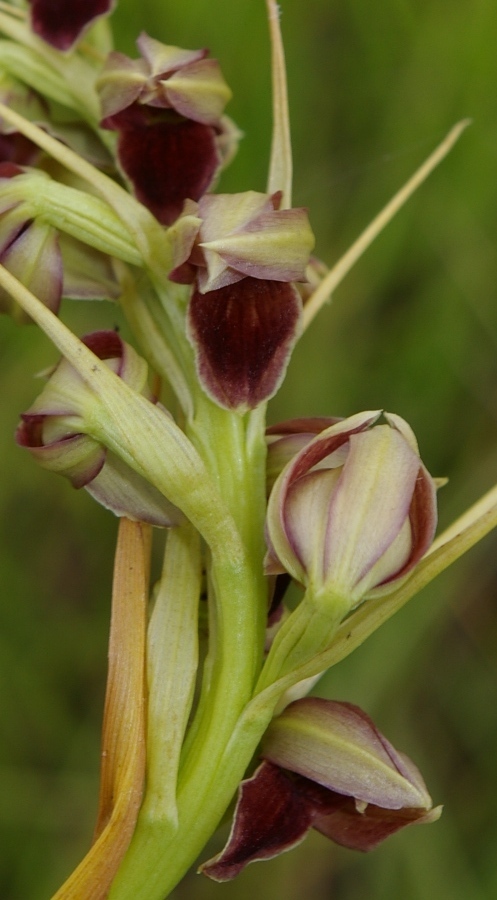
If the flowers of Potts’ Giant Orchid look familiar, there is a botanical reason: it is related to another established Florida native, the Wild Coco Orchid (Eulophia alta). Both are terrestrial orchids in the family Orchidaceae and tribe Cymbidieae. The Royal Botanic Gardens, Kew, currently places both species in the genus Eulophia.
Potts’ Giant Orchid was originally described as Pteroglossaspis pottsii, a name still encountered in older field guides and photographs. Its currently accepted name is Eulophia pottsii. The two are distinct species, but the greenish floral parts and burgundy-to-purple accents can make their flowers look surprisingly similar. Flower color alone is not enough to identify either species reliably.
They also have different geographic ranges. Potts’ Giant Orchid is native to Florida, whereas Wild Coco has a much wider native distribution across tropical and subtropical America and parts of tropical Africa. See naturalist and photographer Rich Leighton’s photographic comparison of Florida’s Cymbidieae orchids, which illustrates both plants. Wild Coco is not a newly discovered species; it appears here only to help explain the resemblance to Potts’ Giant Orchid.
Fire Ladies’ Tresses: A New Species from Polk County
The next story begins in the seasonally wet grasslands of south-central Florida. On August 25, 2014, botanists Steve L. Orzell and Edwin L. Bridges collected the type specimen of an unfamiliar ladies’-tresses orchid at Avon Park Air Force Range in Polk County.
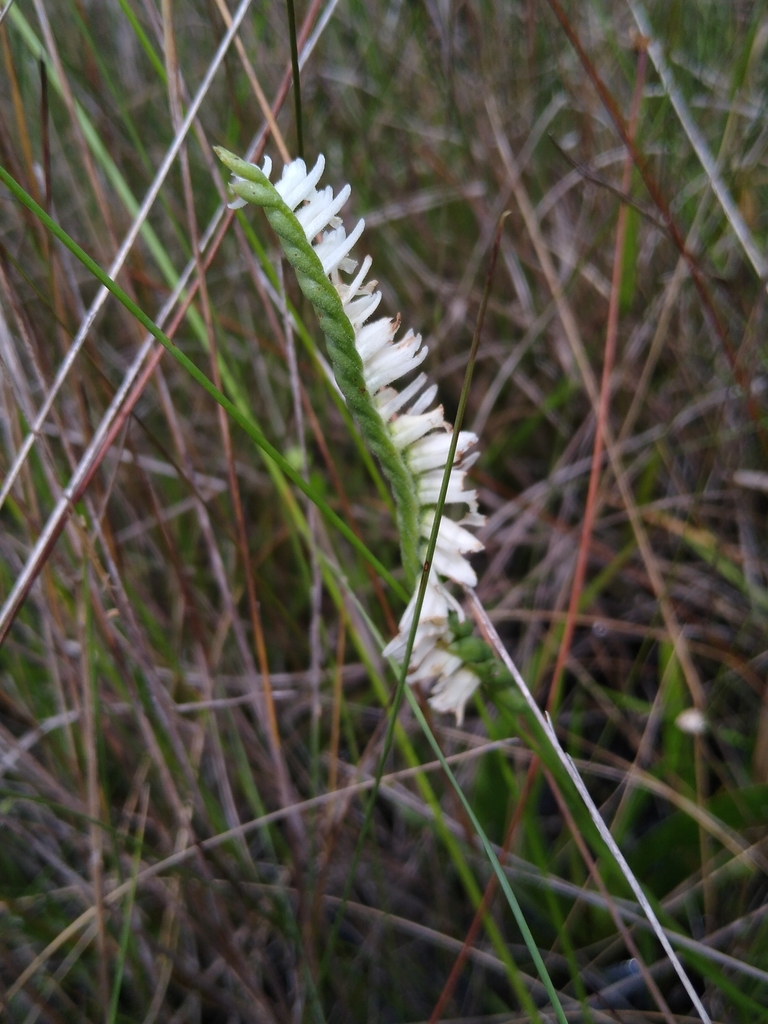
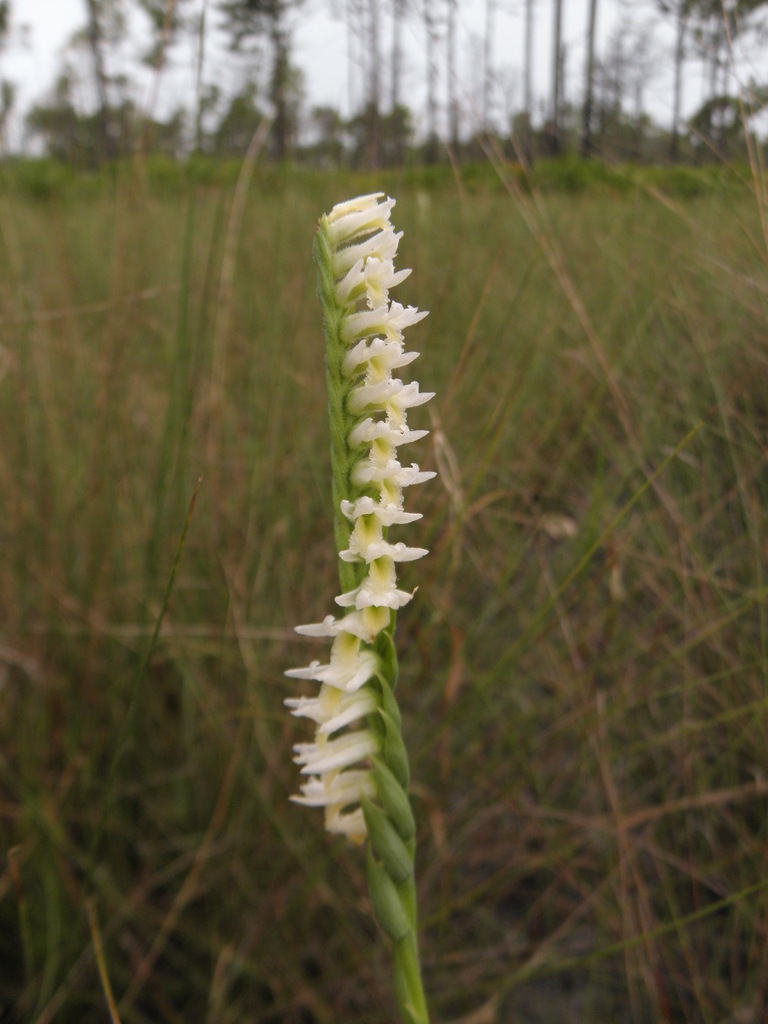
Members of the genus Spiranthes produce small flowers arranged in a spiral along an upright stalk. Because several species look similar, distinguishing them requires close study of flowers, flowering season, and sometimes molecular evidence.
Matthew C. Pace, Orzell, Bridges, and Kenneth M. Cameron formally described Spiranthes igniorchis in the botanical journal Brittonia in 2017. Their research supported its recognition as a distinct species closely related to Spiranthes longilabris.
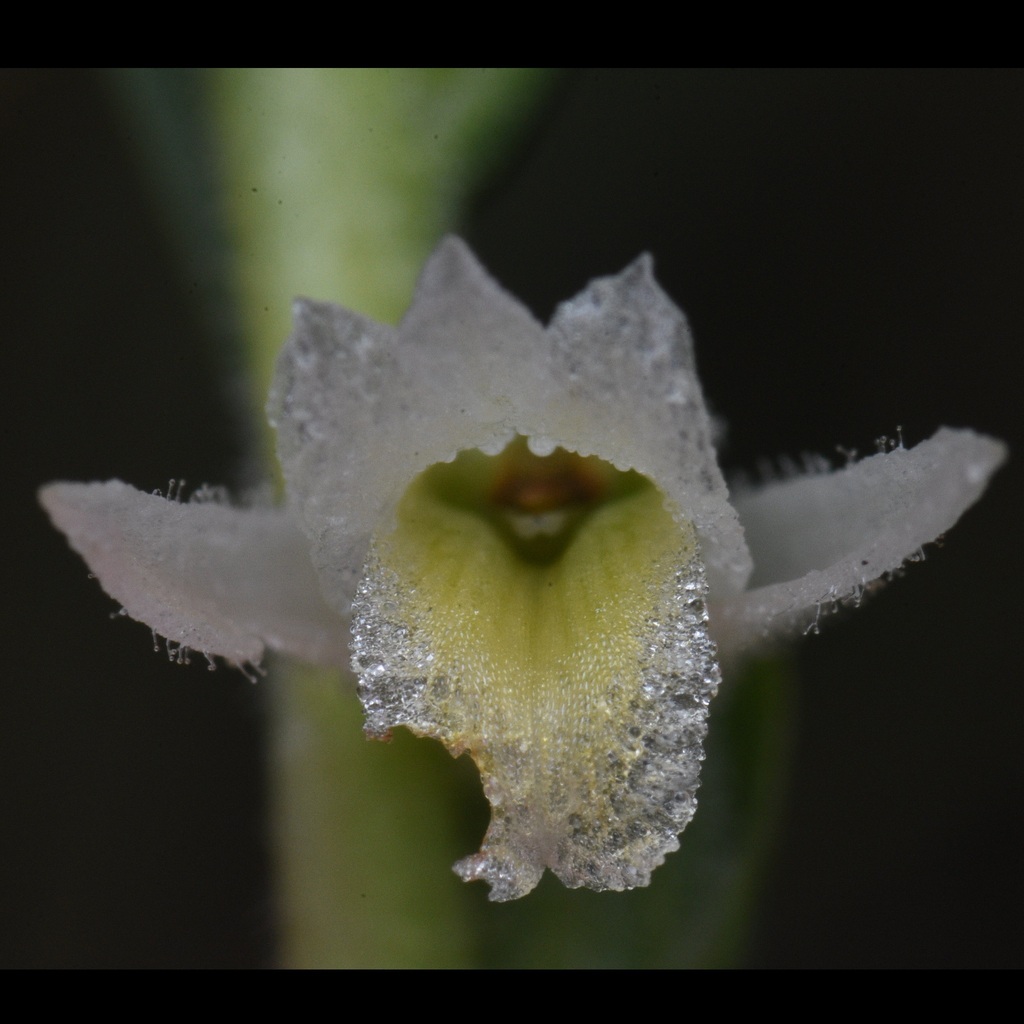
Why Is It Called Fire Ladies’ Tresses?
The name reflects its relationship with fire-maintained, seasonally wet subtropical grasslands. Appropriate recurring fire helps keep such habitats open, limiting the buildup of shrubs and woody plants that can crowd out sun-loving native species.
Fire Ladies’ Tresses produces small, white flowers with a pale yellow to greenish center, arranged in an elegant spiral. It typically flowers during the wet season, August through September, earlier than the related Spiranthes longilabris in south-central Florida.
Researchers identified it as a Florida endemic associated with a restricted area of the Osceola Plain. Its small documented range and habitat specialization underscore the need for continued botanical surveys and habitat management. Public observation records should not be taken as a comprehensive population survey or proof of its current conservation status.
Meet Fire Ladies’ Tresses
- First known scientific collection: 2014, Polk County, Florida.
- Collectors: Steve L. Orzell and Edwin L. Bridges.
- Formal description: 2017, by Matthew C. Pace and coauthors.
- Growth form: Terrestrial, with delicate white flowers on a spiraling spike.
- Habitat: Seasonally wet, fire-maintained grasslands in south-central Florida.
- Flowering: Commonly August to September.
What These Two Florida Orchids Teach Us
Potts’ Giant Orchid and Fire Ladies’ Tresses are different plants from different parts of Florida, but their stories have striking parallels. Both are terrestrial orchids; both are associated with open habitats influenced by fire; and both were recognized through careful fieldwork and botanical research.
They also demonstrate why conservation must extend beyond the showiest and best-known species. A quiet grassland can be every bit as significant to biodiversity as an iconic swamp or old-growth forest.
Protecting Florida’s remaining native habitats protects not only the species we know, but also the discoveries we have yet to make.
Why Orchids Need More Than Seed Storage
Florida’s native orchids face pressures from habitat loss and fragmentation, altered hydrology, inappropriate fire regimes, invasive species, and unauthorized collecting. Orchid seeds are tiny and often depend on relationships with compatible fungi to establish in nature.
For this reason, meaningful orchid conservation may require specialized germination research, fungal partnerships, well-documented seed collections, and long-term habitat stewardship. Seed banking can support conservation, but it cannot replace intact, functioning ecosystems.
At Florida Seed Bank, our mission is to help preserve native plant diversity through responsible research, seed stewardship, scientific collaboration, and restoration planning. Discoveries like these show why that work begins with careful documentation, protection of wild populations, and respect for each plant’s ecological relationships.
Never remove wild orchids or collect seed from protected lands without the required authorization. Photos, field observations, and properly documented botanical surveys can contribute valuable information without disturbing vulnerable populations.
What Else Might Be Waiting in Florida’s Grasslands?
In 2006 and 2014, botanists found evidence of native orchid species that had not yet received formal scientific names. Their descriptions followed in 2007 and 2017. Even after decades of botanical study, Florida’s natural areas can still surprise us.
As development and habitat change continue, the opportunity to understand and protect these plants becomes increasingly urgent. Conserving Florida’s native landscapes today makes tomorrow’s discoveries possible.
Scientific References and Further Reading
- Southwest Florida Water Management District: New Orchid Species Discovered on District Land.
- Royal Botanic Gardens, Kew: Eulophia pottsii and its synonyms.
- Royal Botanic Gardens, Kew: Eulophia alta (Wild Coco Orchid).
- Rich Leighton: Florida’s Wild Native Orchids — Cymbidieae (photo comparisons).
- Pace, Orzell, Bridges & Cameron (2017), Brittonia 69: 323–339.
- North American Orchid Conservation Center: Fire Ladies’ Tresses.
- iNaturalist: Orthochilus pottsii observations; Spiranthes igniorchis observations.
Photo use: The six documentary photographs above were contributed by iNaturalist observers under Creative Commons Attribution-NonCommercial 4.0. Individual captions identify their authors and link to the corresponding observations and license. The original photographs were downloaded at iNaturalist’s large-image size without cropping or compositional alterations, for use in this noncommercial educational article.