1
Structural Diversity
Trees, grasses, wildflowers, vines, and low-growing plants occupy different layers of the ecosystem and create different forms of habitat.
Florida Seed Bank's founding project preserves a carefully selected group of native plants representing the ecological structure and biological relationships of a Central Florida sandhill community.
Florida Seed Bank's first conservation pilot is built around one ecosystem rather than a collection of unrelated species.
The Central Florida Sandhill Seed Conservation & Restoration Pilot brings together grasses, wildflowers, legumes, host plants, pollinator plants, shrubs, and characteristic trees that collectively help form a functioning sandhill plant community.
This approach allows the project to test the full conservation process while preserving ecological relationships that matter for future habitat restoration.
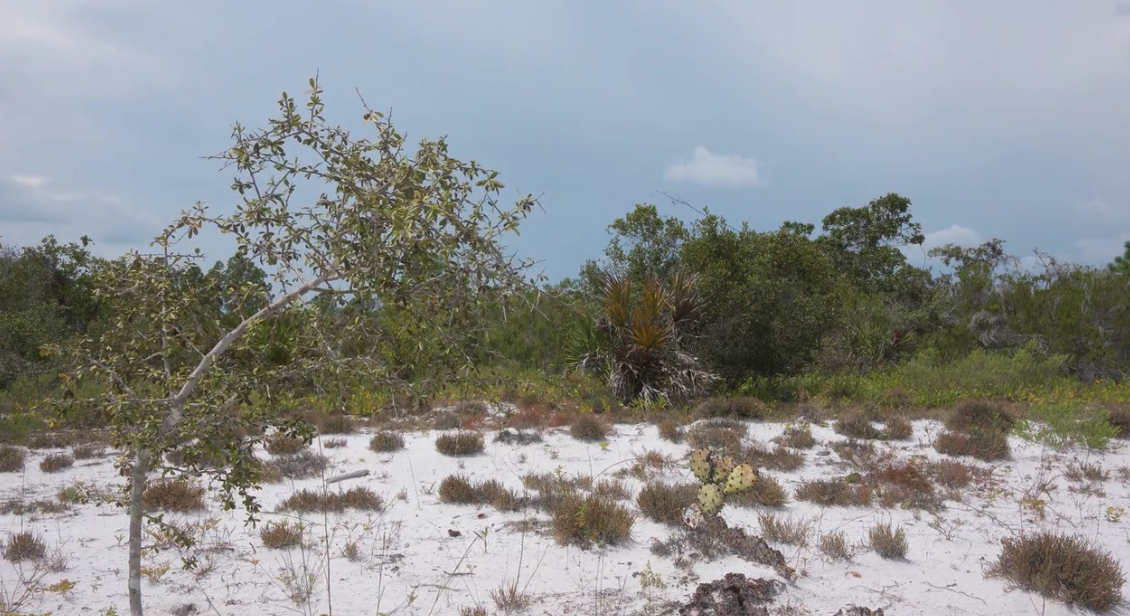
A functioning native landscape depends on relationships among many plants. The founding pilot is intended to reflect those relationships instead of preserving fifteen species simply because they are individually interesting.
Trees, grasses, wildflowers, vines, and low-growing plants occupy different layers of the ecosystem and create different forms of habitat.
Different flowering species provide nectar and pollen across seasons and support native bees, butterflies, moths, hummingbirds, and other wildlife.
Host plants, seeds, acorns, vegetation, and shelter connect native plant conservation directly to the broader sandhill food web.
Preserving a representative group of species helps Florida Seed Bank develop methods that can eventually support more complete native habitat restoration.
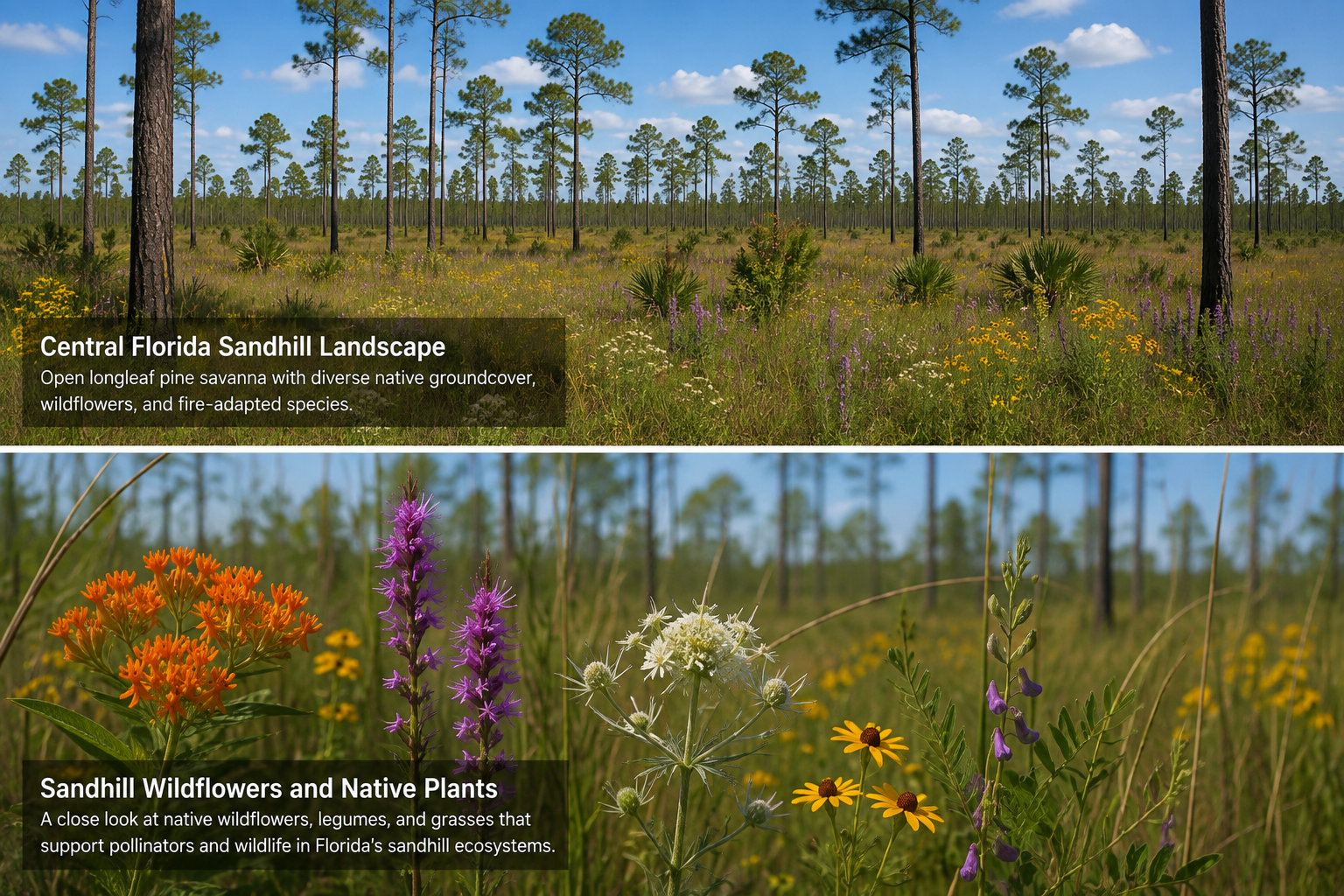
A functioning sandhill cannot be rebuilt from endangered plants alone. Restoration also depends on grasses, canopy trees, legumes, host plants, pollinator plants, shrubs, and other common native species that create the structure and ecological relationships of the community.
Florida Seed Bank conserves those foundation species alongside rare and declining plants because today’s common species can become tomorrow’s restoration bottlenecks. This is one reason our statewide mission extends across Florida’s roughly 3,200 native plant species.
Sandhill is one of Florida's distinctive upland ecosystems. These communities developed on dry, well-drained sandy soils and historically depended on recurring fire to maintain their open structure and diverse groundcover.
Longleaf pine forms an important canopy component, while turkey oak, wiregrass, native grasses, legumes, milkweeds, blazing stars, and many other species create a remarkably diverse understory.
Development, habitat fragmentation, altered fire regimes, and other pressures have reduced or changed many remaining sandhill communities. The ecosystem therefore provides an ideal foundation for demonstrating Florida Seed Bank's larger mission: preserve native plant genetics in a form that can remain useful for future conservation and restoration.
These species form the current working collection for the pilot. Final species selection and collection plans may be refined before field work begins based on scientific guidance, conservation priorities, seed biology, site access, and permitting requirements.
A defining component of Florida's fire-adapted sandhill groundcover and an important species for understanding the relationship between native vegetation and fire.
The signature canopy tree of the longleaf pine ecosystem and an essential part of the ecological structure the pilot is intended to represent.
A characteristic sandhill oak providing structural diversity, wildlife habitat, and acorns that contribute to the ecosystem's food web.
A warm-season bunchgrass that adds structural and functional diversity to the native ground layer.
A distinctive dry-site milkweed that provides an important relationship between sandhill plant conservation and native butterfly ecology.
A native milkweed that contributes both larval host value and nectar resources to the sandhill community.
A characteristic native wildflower that contributes seasonal floral resources and diversity to the sandhill understory.
A showy native wildflower that contributes important late-season nectar and visual diversity to the ground layer.
A tall native wildflower with a different flower structure from many of the pilot's other species, adding both ecological and structural diversity.
A native legume suited to dry sandy conditions that broadens the pilot beyond grasses and flowering composites.
A native vine and legume that contributes a climbing growth form and another functional layer to the proposed collection.
A longleaf-associated native legume contributing additional functional and botanical diversity to the ground layer.
A low-growing native of sandy habitats that helps represent the smaller woody and subshrub component of the ecosystem.
A native mint-family wildflower that adds another floral form and provides resources for a broad range of pollinating insects.
A distinctive native forb whose unusual form helps broaden the structural and ecological diversity represented in the pilot.
A sandhill conservation project should represent more than the wildflowers growing beneath the canopy. Longleaf pine and turkey oak help define the physical and ecological character of the community itself.
Longleaf pine is not included merely as another species on a list. It represents the canopy and one of the defining ecological foundations of the sandhill and longleaf pine landscape.
Including it means the founding pilot acknowledges the entire plant community—from the tallest canopy tree to the grasses and wildflowers growing at ground level.
Turkey oak contributes additional woody structure and an important wildlife relationship through its foliage, shelter, and acorns.
Its seed biology may also require a different conservation approach than many dry-stored wildflower seeds, making it a valuable species for testing Florida Seed Bank's commitment to species-appropriate preservation rather than a universal freezer method.
The founding project is intended to build the operational and scientific foundation needed for much larger statewide conservation work.
Develop a consistent system for documenting wild populations, collection conditions, ecological provenance, photographs, permissions, and other information that gives preserved seed long-term scientific value.
Learn how species with different seed types respond to cleaning, handling, germination testing, short-term storage, long-term storage, and other conservation approaches.
Develop practical methods for preserving diversity within native populations rather than relying on a small or unrepresentative number of individual plants.
Build a system in which preserved material can ultimately be traced into propagation or restoration projects while maintaining the provenance information needed to understand its origin.
The project moves deliberately through collection, documentation, conservation, testing, seed amplification, and restoration.
Maintain and refine collection, documentation, seed handling, viability, conservation, and data protocols while building the scientific, landowner, restoration, and land-management relationships needed for responsible field work.
Florida Seed Bank formally launched in January 2027 in preparation for incorporation as a Florida nonprofit in January 2027 and the completion of its initial governance and organizational setup. With that foundation in place, the organization began its conservation work to preserve Florida's native plant biodiversity and build a long-term statewide seed conservation program.
Begin appropriately authorized and scientifically documented collections from suitable sandhill populations as sites, permissions, permits, seed availability, and conservation conditions allow.
Process collections, establish appropriate preservation methods, conduct baseline testing where suitable, and build geographically separate backup holdings when practical.
Use appropriately selected material to demonstrate that a conservation accession can remain traceable from its wild source through preservation and ultimately into meaningful restoration or research use.
The Central Florida Sandhill Seed Conservation & Restoration Pilot is Florida Seed Bank's founding conservation project. It establishes and demonstrates a scientifically documented approach to conserving native seed from a representative Central Florida sandhill plant community.
The species list, scientific methodology, collection locations, partner participation, and project schedule may be refined as Florida Seed Bank receives additional scientific guidance and evaluates land access, seed availability, conservation priorities, and applicable permitting requirements.
As the project moves through field collection, preservation, viability testing, seed amplification, and restoration work, Florida Seed Bank documents its progress and use what is learned from the pilot to help guide the development of a broader statewide native seed conservation program.
The Sandhill Pilot is the first step toward a statewide genetic resource repository representing Florida's roughly 3,200 native plant species and the ecosystems those plants form together.
How We Preserve Seeds Get Involved