Florida Seed Bank Opposes the Expansion of Environmentally Destructive Data Centers
Florida already has an established data-center industry. Enterprise, colocation, cloud, and internet-connectivity facilities operate throughout Miami, Orlando, Tampa, Jacksonville, Lakeland, and other parts of the state. These include major facilities such as CoreSite’s Orlando data center and HostDime’s data-center operations in Orlando. And Miami has its own issues of new AI data centers coming as well. Downtown Miami got its first major data center in 2001, a massive 750,000-square foot facility that serves as a computing hub for much of Latin America. More than 1,500 data centers are in “various stages of development” across the U.S. right now, according to a recent analysis from Pew Research Center.
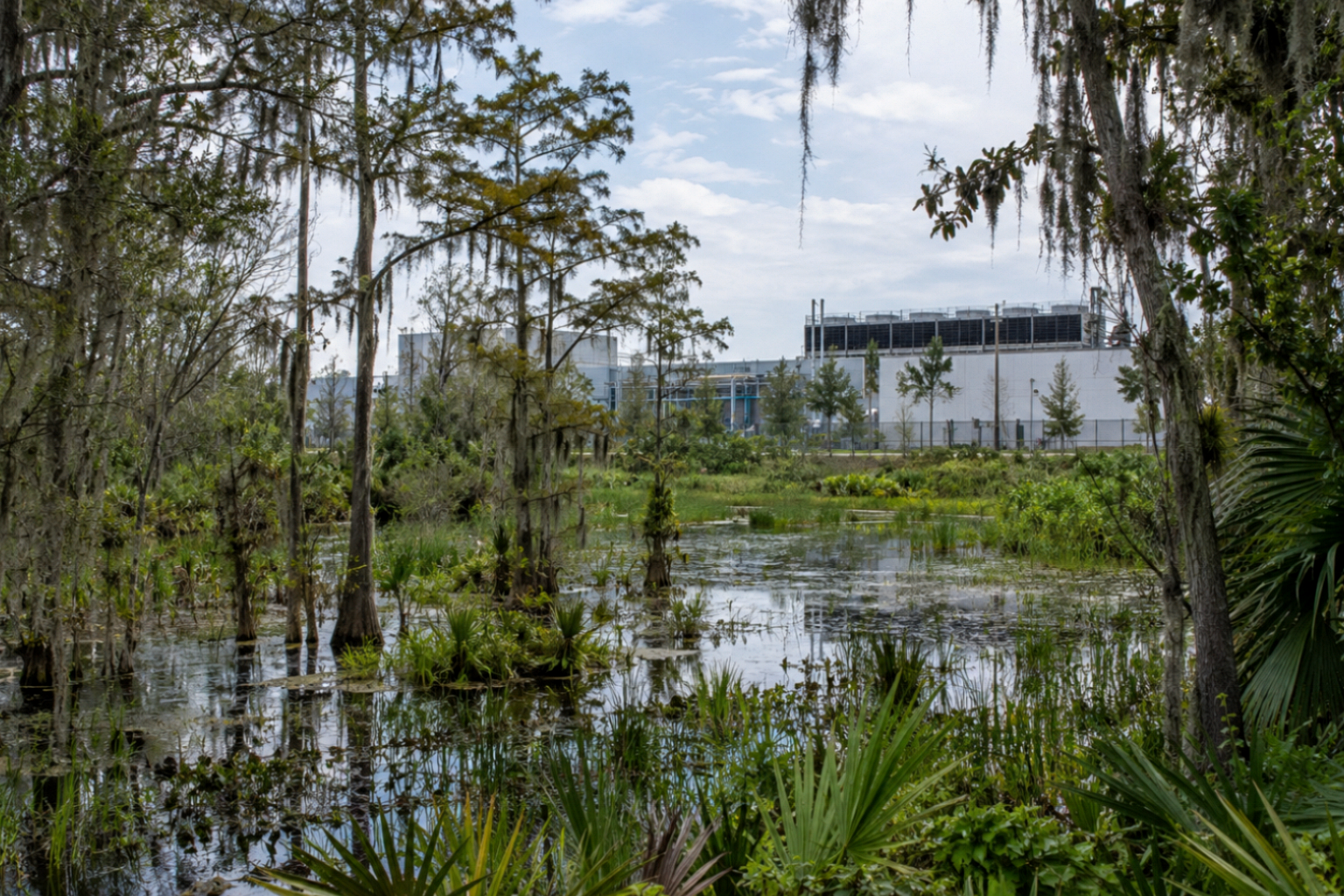
Florida is now facing a more dangerous phase of that industry’s expansion: proposals for enormous hyperscale and artificial-intelligence data-center campuses requiring substantially more land, electricity, utility infrastructure, and potentially water than traditional facilities.
Fort Meade approved a development agreement in April 2026 for a proposed hyperscale data-center campus on approximately 1,300 acres of former phosphate-mining land. The project is approved at the city level but is not yet an operating data center and still faces additional permitting, legal challenges, and questions surrounding its projected water and electricity requirements. If constructed, it has been described as potentially Florida’s first hyperscale data-center campus. WUSF and FOX 13 Tampa Bay have reported on the proposal and the surrounding concerns.
In Palm Beach County, public opposition involving water consumption, electricity demand, noise, infrastructure, and nearby communities contributed to the rejection of the proposed Project Tango expansion in July 2026. WLRN has documented the dispute and the broader water concerns surrounding Florida’s proposed AI data centers.
Florida Seed Bank opposes this expansion.
Data Centers Are Bad for Florida
Data centers are often promoted as clean and nearly invisible technology. Their physical and environmental footprints tell a different story.
Every facility requires land, electricity, cooling, utility connections, and emergency backup systems. Large campuses may also require new roads, substations, transmission corridors, pipelines, power-generation capacity, stormwater infrastructure, and industrial-scale cooling equipment.
When these facilities expand into undeveloped or environmentally sensitive areas, the consequences can include:
- Destruction and fragmentation of native habitat.
- Loss of rare, threatened, and endangered plant populations.
- Displacement of birds, mammals, reptiles, amphibians, pollinators, and other wildlife.
- Additional demand on groundwater, municipal water, and reclaimed-water systems.
- Changes to wetlands, springs, rivers, seasonal wetlands, and aquifer-recharge areas.
- Construction of transmission lines, substations, roads, pipelines, and power infrastructure.
- Air pollution from diesel or gas-powered backup generators.
- Increased electricity demand that may prolong or expand fossil-fuel generation.
- Industrial noise, artificial light, stormwater runoff, and heat.
- Greater competition among corporations, residents, agriculture, and natural ecosystems for limited resources.
The environmental impact does not stop at the edge of a data-center property. Supporting infrastructure can expand the development footprint across entire communities and landscapes.
Florida Must Not Be Driven Back to Coal
Data-center expansion must not become an excuse to delay coal-plant retirements, increase coal generation, or weaken environmental protections.
The concern is reflected in the September 15, 2026, Orlando Sentinel guest commentary titled “Don’t let data centers drive us back to coal.”
Florida Seed Bank’s position is clear: corporate demand for computing power should not reverse progress toward less polluting electricity.
Before a major data-center project is approved, the public must know whether supplying it would require keeping older coal plants operating longer, increasing fossil-fuel generation, or constructing additional power and fuel infrastructure.
Those consequences must be examined as part of the development’s environmental footprint. Pollution generated at a distant power plant does not disappear simply because it occurs outside the data-center property.
Florida Seed Bank opposes using data-center electricity demand to justify extending coal dependence or shifting additional pollution and infrastructure costs onto surrounding communities.
A technological future that requires prolonging coal generation is not the environmental progress Florida needs.
Natural Gas Is Not an Environmental Escape Hatch
The scale of projected natural-gas demand raises another serious concern.
Bloomberg reported on September 14, 2026, that BloombergNEF forecasts an increase of approximately 15 billion cubic feet per day in natural gas used to generate electricity for U.S. data centers by 2035. That projected increase alone exceeds the current total gas consumption of most countries.
BloombergNEF also projects natural gas supplying approximately 69% of the electricity needed by new grid-connected data centers. These are national forecasts—not current consumption, guaranteed outcomes, or Florida-specific estimates. The analysts acknowledge substantial uncertainty about how much proposed data-center capacity will actually be built. Bloomberg, accessible republication of Bloomberg’s report.
For Florida Seed Bank, this outlook reinforces the need to examine the energy systems behind AI infrastructure—not merely the appearance of the buildings that house it.
Natural gas is still a fossil fuel. Expanding gas dependence can require additional power plants, pipelines, fuel-delivery infrastructure, and long-term investment in combustion-based electricity.
Florida should not accept decades of additional fossil-fuel dependence as an unavoidable price of accommodating private computing demand.
Data-center proposals should therefore disclose not only their projected electricity consumption, but also the generating facilities and infrastructure expected to supply it, including any proposed extension of coal-plant operations or construction of new gas-fired capacity.
Florida Seed Bank opposes projects that prolong coal dependence or require major new fossil-fuel infrastructure at the expense of Florida’s communities and natural resources.
Florida’s Water Is Not an Industrial Giveaway
Florida’s water supply is not unlimited.
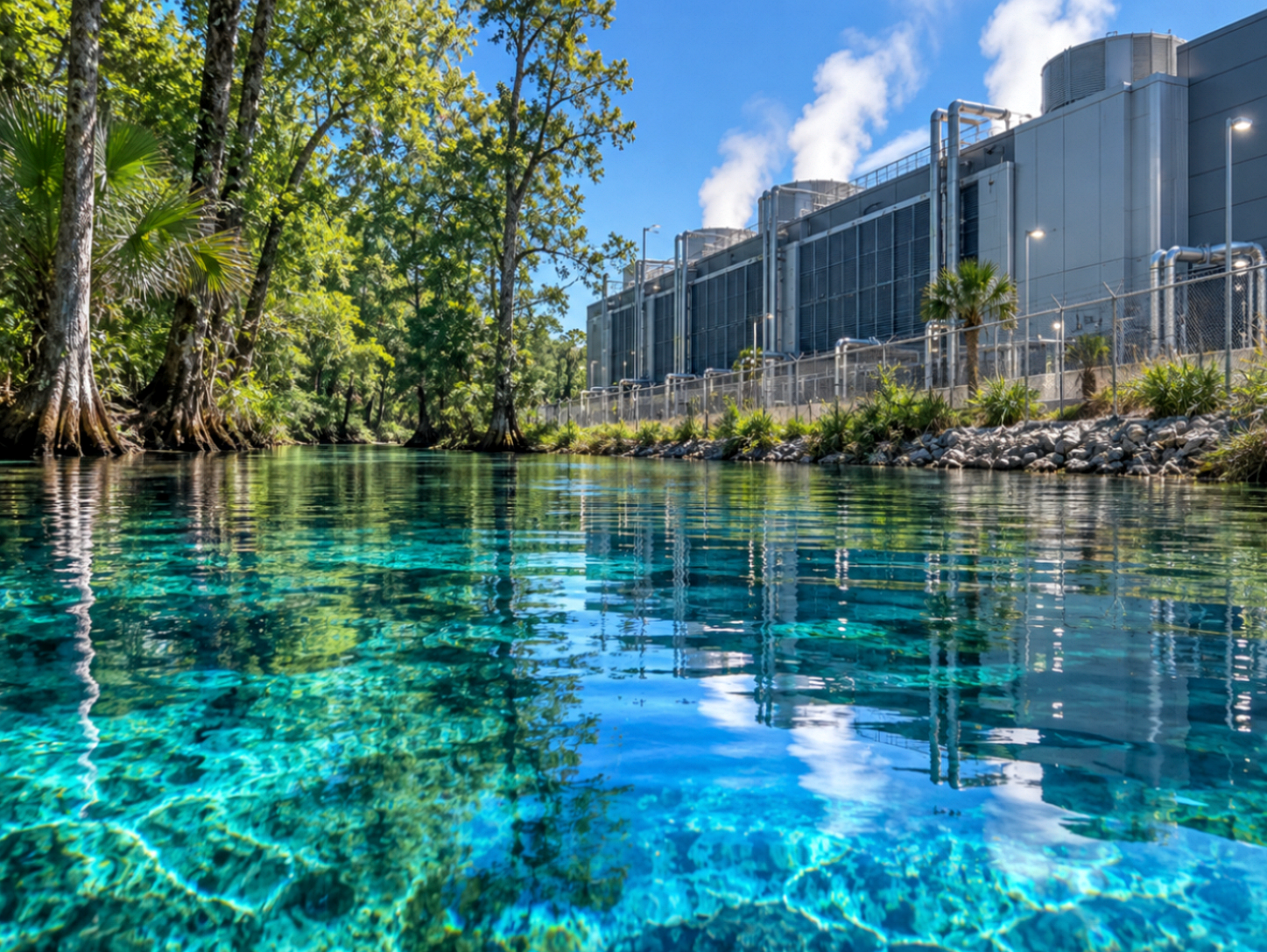
Our aquifers, wetlands, springs, rivers, lakes, and seasonal water systems are interconnected. Native plant communities and wildlife depend on specific water levels, flooding patterns, water quality, and seasonal cycles.
Groundwater withdrawals are therefore not solely a question of whether water continues flowing from residential faucets. Changes in groundwater levels can affect wetlands, springs, soils, vegetation, and wildlife habitat far beyond the boundaries of a single development.
Data-center water consumption varies according to facility size, cooling technology, climate, workload, and water source. That variation is precisely why every proposed facility must publicly disclose its projected daily and annual water demand before receiving development approval.
Companies should not be allowed to hide behind vague promises of “efficient cooling” or future conservation measures. Florida residents deserve verified numbers, identified water sources, independent analysis, and enforceable limits.
Florida Seed Bank opposes data centers that depend on substantial withdrawals from Florida’s potable water supplies or aquifers.
Native Habitat Cannot Be Replaced
Florida continues to lose natural land to development, roads, utility expansion, pollution, invasive species, altered fire patterns, and growing water demand.
Large data-center campuses create another source of pressure on ecosystems that are already fragmented and disappearing.
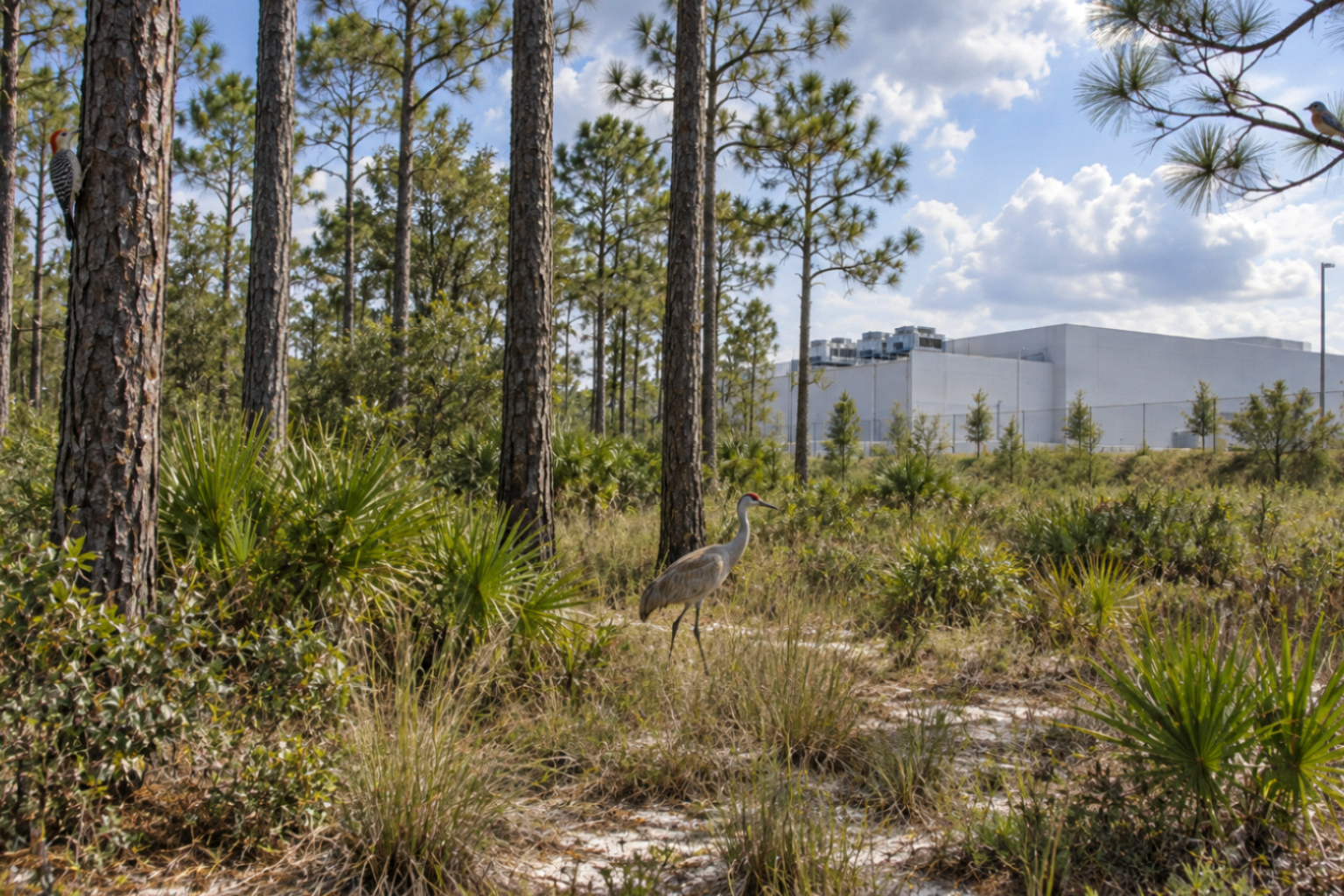
Wetlands, pine flatwoods, sandhills, scrub, prairies, hammocks, swamps, and other native communities are not vacant land. They are complex living systems supporting plants, fungi, pollinators, birds, fish, reptiles, amphibians, and mammals.
Once an established native ecosystem is cleared, it cannot simply be recreated by installing landscaping, relocating a few plants, or purchasing mitigation credits somewhere else.
Avoiding destruction must come first.
Seed Banking Cannot Replace a Living Ecosystem
Florida Seed Bank preserves native plant material as protection against extinction, catastrophic loss, and the disappearance of genetic diversity.
But seed banking is a last line of defense—not permission to destroy habitat.
A seed stored in a freezer cannot replace a functioning wetland, pine rockland, sandhill, scrub, prairie, swamp, or forest. It cannot reproduce the relationships among plants, fungi, pollinators, wildlife, soil, fire, water, and climate that make an ecosystem alive.
Developers must never be allowed to claim that collecting seeds before construction compensates for destroying the ecosystem that produced them.
Seed rescue may preserve genetic material when habitat loss cannot be prevented, but it does not make that destruction acceptable.
Corporate Promises Are Not Environmental Protection
Data-center proposals frequently emphasize investment totals, construction activity, tax revenue, and technology-sector prestige. Those claims must be evaluated against independently verified information about:
- Permanent local employment after construction ends.
- Public tax incentives and utility subsidies.
- Water and electricity demand.
- Infrastructure costs placed on residents and ratepayers.
- Environmental damage and required mitigation.
- Emergency-generator emissions and fuel storage.
- Long-term responsibility for contaminated, abandoned, or obsolete facilities.
- The identities of the companies that will ultimately operate the facilities.
Florida communities should not surrender land, water, electricity, or environmental protections based on undisclosed tenants, speculative job projections, or unenforceable corporate promises.
Some of the wealthiest corporations in the world should not be permitted to transfer their environmental and infrastructure costs to Florida residents and future generations.
Our Position
Florida Seed Bank opposes the construction or expansion of data centers that:
- Require substantial withdrawals from Florida’s potable water supplies or aquifers.
- Destroy wetlands, conservation lands, aquifer-recharge areas, wildlife corridors, or high-quality native habitat.
- Threaten rare, threatened, or endangered plants and animals.
- Require major new fossil-fuel generation or environmentally destructive transmission infrastructure.
- Conceal projected water consumption, electricity demand, cooling technology, ownership, or environmental impacts.
- Receive public subsidies while shifting infrastructure and environmental costs onto surrounding communities.
- Are approved without independent studies, meaningful public participation, and comprehensive environmental review.
- Divide a large campus into smaller applications to avoid stricter regulatory review or hide cumulative impacts.
Florida Seed Bank also opposes weakening local authority so that municipalities and counties cannot protect their residents, water supplies, and natural resources from inappropriate data-center development.
What Florida Must Require
Before any new large-scale data center or major expansion is considered, Florida should require:
- A comprehensive and independent environmental-impact assessment.
- Multiseason surveys for rare, threatened, and endangered plants and animals.
- Public disclosure of projected daily and annual water consumption.
- Identification of the exact proposed water source.
- Public disclosure of electricity demand, cooling systems, backup generators, fuel storage, and anticipated utility expansions.
- Evaluation of cumulative regional water and electricity demand—not merely the demand from one project considered in isolation.
- Protection of wetlands, aquifer-recharge areas, wildlife corridors, conservation lands, and intact native ecosystems.
- Analysis of impacts from roads, substations, transmission lines, pipelines, and other supporting infrastructure.
- Public hearings before zoning, water-use, utility, tax-incentive, or development decisions are finalized.
- Enforceable water, pollution, habitat, and noise limits.
- Independent environmental monitoring throughout construction and operation.
- Financial guarantees sufficient to restore damage and decommission the facility if it is abandoned.
- Proof that the project cannot reasonably be located on previously developed industrial land with less environmental impact.
Corporate assurances are not enough. Every environmental commitment must be public, measurable, enforceable, independently monitored, and backed by meaningful financial responsibility.
Florida’s Natural Future Comes First
Florida does not need to sacrifice its water, wildlife, endangered species, native plants, and remaining natural lands to satisfy the computing demands of private corporations.
Florida Seed Bank will advocate for our state’s native plants, animals, ecosystems, and water resources. We will monitor proposed data-center developments, educate the public, support affected communities, and oppose projects that place corporate computing demands above Florida’s biological future.
Florida is not empty land waiting to be industrialized.
Florida is not a server farm.
Florida is alive—and it must be protected.